If There Is Much In The Window There Should Be More In The Room

Saturday, March 28, 2009

Concierto de Aranjuez John Williams BBC Proms 2005


The Concierto de Aranjuez is a composition for classical guitar and orchestra by the Spanish composer Joaquín Rodrigo. Written in 1939, it is probably Rodrigo's best-known work, and its success established his reputation as one of the most significant Spanish composers of the twentieth century.


The Concierto de Aranjuez was inspired by the gardens at Palacio Real de Aranjuez, the spring resort palace and gardens built by Philip II in the last half of the 16th century and rebuilt in the middle of the 18th century by Ferdinand VI. 


The work attempts to transport the listener to another place and time through the evocation of the sounds of nature.

According to the composer, the first movement is "animated by a rhythmic spirit and vigour without either of the two themes... interrupting its relentless pace";
the second movement "represents a dialogue between guitar and solo instruments (cor anglais, bassoon, oboe, horn etc.)"; and the last movement "recalls a courtly dance in which the combination of double and triple time maintains a taut tempo right to the closing bar." 

He described the concerto itself as capturing "the fragrance of magnolias, the singing of birds, and the gushing of fountains" in the gardens of Aranjuez.

Some say that the second movement was inspired by the bombing of Guernica in 1937. 

In her autobiography, the composer's wife Victoria maintains that it was both an evocation of the happy days of their honeymoon and a response to Rodrigo's devastation at the miscarriage of their first pregnancy.

Rodrigo dedicated the Concierto de Aranjuez to Regino Sainz de la Maza.
Rodrigo, blind since age three, was a pianist. He did not play the guitar, yet he still managed to capture the spirit of the guitar in Spain.

Composition

Composed in early 1939, in Paris, amid the tensions of the pending war, it was the first work Rodrigo had written for guitar and orchestra.
The instrumentation is unusual: rarely does the guitar face the forces of a full orchestra. However, the guitar is never overwhelmed, remaining the solo instrument throughout.

Movements

This concerto is in three movements, Allegro con spirito, Adagio and Allegro gentile.

The second movement, the best-known of the three, is marked by its slow pace and quiet melody, introduced by the English horn, with a soft accompaniment by the guitar and strings. A feeling of quiet regret permeates the piece. 

Ornamentation is added gradually to the melody in the beginning. An off-tonic trill in the guitar creates the first seeds of tension in the piece; they grow and take hold, but relax back to the melody periodically. 

Eventually, a climactic build-up starts. This breaks back into the main melody, molto appassionato, voiced by the strings with accompaniment from the woodwinds.
The piece finally resolves to a calm arpeggio from the guitar, though it is the strings in the background rather than the guitar’s final note that resolve the piece. The third movement is in mixed metre, alternating between 2/4 and 3/4.


John Williams, guitar
BBC Symphony Orchestra
Paul Daniel, conductor,
Royal Albert Hall, 10 September, 2005

Friday, March 27, 2009

NG London/Collection News: Zoomable Pictures


http://www.nationalgallery.org.uk/collection/news/newsitems/zoom.htm

Zoom-able Pictures

An exciting new way to explore the National Gallery's world class painting collection online.

With the introduction of high definition zoomable scans created using scanning technology developed in the National Gallery's Scientific and Photographic departments, visitors to the site are now able to marvel at the beauty and skill with which some of the world's greatest masterpieces were rendered.

Tuesday, March 24, 2009

Pieter - Secret Garden


http://pieter89.multiply.com/music/item/51/Secret_Garden

It is the hour of departure, the hard cold hour
which the night fastens to all the timetables.

The rustling belt of the sea girdles the shore.
Cold stars heave up, black birds migrate.

Deserted like the wharves at dawn.
Only tremulous shadow twists in my hands.

Oh farther than everything.
Oh farther than everything
It is the hour of departure.
Oh abandoned one!


La Canción Desesperada

Emerge tu recuerdo de la noche en que estoy.
El río anuda al mar su lamento obstinado.

Abandonado como los muelles en el alba.
Es la hora de partir, oh abandonado!

Sobre mi corazón llueven frías corolas.
Oh sentina de escombros, feroz cueva de náufragos!

En ti se acumularon las guerras y los vuelos.
De ti alzaron las alas los pájaros del canto.

Todo te lo tragaste, como la lejanía.
Como el mar, como el tiempo. Todo en ti fue naufragio!

Era la alegre hora del asalto y el beso.
La hora del estupor que ardía como un faro.

Ansiedad de piloto, furia de buzo ciego,
turbia embriaguez de amor, todo en ti fue naufragio!

En la infancia de niebla mi alma alada y herida.
Descubridor perdido, todo en ti fue naufragio!

Te ceñiste al dolor, te agarraste al deseo.
Te tumbó la tristeza, todo en ti fue naufragio!

Hice retroceder la muralla de sombra,
anduve más allá del deseo y del acto.

Oh carne, carne mía, mujer que amé y perdí,
a ti en esta hora húmeda, evoco y hago canto.

Como un vaso albergaste la infinita ternura,
y el infinito olvido te trizó como a un vaso.

Era la negra, negra soledad de las islas,
y allí, mujer de amor, me acogieron tus brazos.

Era la sed y el hambre, y tú fuiste la fruta.
Era el duelo y las ruinas, y tú fuiste el milagro.

Ah mujer, no sé cómo pudiste contenerme
en la tierra de tu alma, y en la cruz de tus brazos!

Mi deseo de ti fue el más terrible y corto,
el más revuelto y ebrio, el más tirante y ávido.

Cementerio de besos, aún hay fuego en tus tumbas,
aún los racimos arden picoteados de pájaros.

Oh la boca mordida, oh los besados miembros,
oh los hambrientos dientes, oh los cuerpos trenzados.

Oh la cópula loca de esperanza y esfuerzo
en que nos anudamos y nos desesperamos.

Y la ternura, leve como el agua y la harina.
Y la palabra apenas comenzada en los labios.

Ese fue mi destino y en él viajó mi anhelo,
y en él cayó mi anhelo, todo en ti fue naufragio!

Oh, sentina de escombros, en ti todo caía,
qué dolor no exprimiste, qué olas no te ahogaron!

De tumbo en tumbo aún llameaste y cantaste.
De pie como un marino en la proa de un barco.

Aún floreciste en cantos, aún rompiste en corrientes.
Oh sentina de escombros, pozo abierto y amargo.

Pálido buzo ciego, desventurado hondero,
descubridor perdido, todo en ti fue naufragio!

Es la hora de partir, la dura y fría hora
que la noche sujeta a todo horario.

El cinturón ruidoso del mar ciñe la costa.
Surgen frías estrellas, emigran negros pájaros.

Abandonado como los muelles en el alba.
Sólo la sombra trémula se retuerce en mis manos.

Ah más allá de todo. Ah más allá de todo.
Es la hora de partir. Oh abandonado!


-- Esta obra fue escrita por Pablo Neruda

Friday, March 20, 2009

Dog Cull in Bali: Take Action Against Cruelty


http://www.wspadonations.org/pages/2700_dog_cull_in_bali_take_action_against_cruelty.cfm

WSPA Australia & New Zealand | Stop Press - The World Society for the Protection of Animals

Bali’s dogs are dying. The island’s authorities, in a knee-jerk reaction to six suspected human rabies fatalities, are culling dogs.

But over 90 per cent of the island’s dogs are owned and roam freely, meaning the majority of the animals being killed are healthy, loved pets.

So far, over 1,000 dogs have died. Strychnine poison is widely used, which leaves the animals conscious throughout the convulsions that end in suffocation. The suffering is acute.


Sunday, March 15, 2009

Science of Stress Video -- National Geographic


http://video.nationalgeographic.com/video/player/science/health-human-body-sci/human-body/science-stress-sci.html

Using tools like treadmills, and wicked math problems, these scientists are on a mission to prove that stress isn't all in your mind....

Yet not all stress are bad...


Child Abuse Alters Stress-Fighting Gene, Study Says


http://news.nationalgeographic.com/news/2009/02/090223-abused-children-genes.html


Childhood abuse can permanently alter the way a key stress-fighting gene works, leaving victims more vulnerable to stressful events throughout their lives, new research reveals.

Sunday, March 8, 2009

Beyonce and Justin Timberlake SNL Skit (11/15/08) - JiggyStudio.com


http://www.myxer.com/video/id/1088500/Aaron/YouTube-Beyonce-Justin-Timberlake-Single-ladies-at-SNL/

Beyonce recently appeared on Saturday Night Live, performing a spoof of filming her Single Ladies video.

Justin Timberlake and Andy Samberg (of SNL Dick In A Box fame) play her backup dancers for the videoshoot. Hilarity ensues.


Thursday, March 5, 2009

Elis Regina, Águas de Março


Elis Regina (March 17, 1945 – January 19, 1982) was a singer of Brazilian popular music who achieved great success and recognition during her lifetime. She remains one of the most popular and beloved stars in Brazil.

In the late 1960s and early 1970s, Elis Regina helped to popularize the work of the tropicalismo (Tropicália) movement, recording songs by musicians such as Gilberto Gil.

Her 1974 collaboration with Antonio Carlos Jobim, Elis & Tom, is often cited as one of the greatest bossa nova albums of all time, which also includes what many consider the all-time best Brazilian song, "Águas de Março".

She possessed an exciting voice and superb pronunciation and intonation, and excelled at up-tempo numbers and ballads under the banner of Brazilian Popular Music Música Popular Brasileira. Her nicknames were "furacão" ("hurricane") and "pimentinha" ("little pepper").

When Elis Regina died at the age of 36 in 1982, on the verge of a new marriage, new house, new recording contract, and new music group, reportedly of an accidental mixture of alcohol (from the previous night) and cocaine (the following morning), she had recorded dozens of top-selling records in her career.

Her death swept the country in mourning and 100,000 mourners and music stars attended her memorial that had to be held in a soccer stadium.

Elis Regina has sold over 80 million albums, most of which are still available. Her death is still being mourned in Brazil and around the world.


Wednesday, March 4, 2009

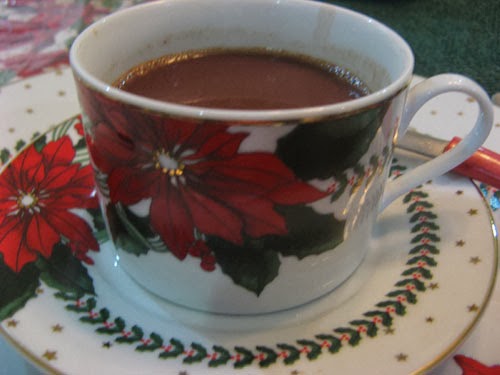
Hot Chocolate Drink From Tablea Tsokolate | Pinoy Food

http://pinoyfoodblog.com/celebrations/noche-buena/hot-chocolate-drink-from-tablea-tsokolate/

Our Noche Buena is never complete without the hot tsokolate made from the native Tablea (cacao chocolate).

The fragrant aroma is something that can never replace all those Starbucks frapucciono or chocolate drinks from fancy coffee shops.

However, tablea is best prepared using a batirol and a tsokolatera so the consistency is smooth. A batirol is a wooden whisk used to mix tablea (a block of pure cocoa) and water into a thick, grainy, hot chocolate drink.

The tablea and water are mixed in a cast-iron pitcher called a tsokolatera. Like a kawali or wok, a tsokolatera (Chocolatera or Chocolate Pot) performs better as it ages.


Friday, February 27, 2009

Scientists Model Words as Entangled Quantum States in our Minds


http://www.physorg.com/news154180635.html


Researchers have modeled the human mental lexicon as consisting of words that cannot be separated from other words, which may explain why words have many associations, a feature which helps us communicate.

When you hear the word “planet,” do you automatically think of the word’s literal definition, or of other words, such as “Earth,” “space,” “Mars,” etc.?

Especially when used in sentences, words tend to conjure up similar words automatically. Further, human beings’ ability to draw associations and inferences between words may explain why we’re generally able to communicate complex ideas with each other quite clearly using a limited number of words.


Monday, February 23, 2009

An Update on Samuel Armas "The Hand of Hope"


http://freerepublic.com/focus/f-news/1012548/posts

"The Hand That Touched The World" Nearly Four Years Later

It was the "hand of hope," a photo of an unborn baby's hand, that made its way around the world within days of appearing in USA Today. Taken by Michael Clancy, the color photo showed Samuel's tiny hand grasping a surgeon's finger during in utero surgery. See story, page 9 about Samuel's visit to a Senate Committee hearing. Photo above by John Imbody

A Flash of Life

Special to NRL News by Jonathan Imbody

Flashing an impish grin, three-year-old Samuel Armas quickly ducked behind a chair as a photographer tried to capture his picture at a recent Senate hearing in Washington, D.C. Samuel hadn't seemed quite so shy during his first photographic session.

A photo of his tiny hand, grasping a surgeon's finger during in utero surgery, traveled around the globe and stunned a world that had tried to hide its face from the reality of life in the womb. (The photo can be viewed at www.michaelclancy.com.)


Sunday, February 1, 2009

The Debate

THE DEBATE


Back ten centuries ago, the Pope decided that all the Muslims had to leave Jerusalem. Naturally there was a big uproar from the Muslim community. So the Pope made a deal. He would have a religious debate with a member of the Muslim community. If the Muslim won the debate, all the Muslims could stay. If the Pope won, all the Muslims would have to leave.

The Muslims realized that they had no choice. They looked around for a champion who could defend their faith, but no one wanted to volunteer. It was too risky. But they finally picked their representative, an old Mullah who unknowingly agreed without knowing what he was getting himself into. He agreed only on the condition that neither side be allowed to talk but communicate by miming. The Pope agreed.


The day of the great debate came. The Mullah and the Pope sat opposite each other for a full minute before the Pope raised his hand and showed three fingers. The Mullah looked back at him and raised his middle finger…


The Pope waved his fingers in a circle around his head. The Mullah  pointed to the ground and stamped his foot.


The Pope pulled out a wafer and a glass of wine. The Mullah pulled out an apple. The Pope stood up and said, 'I give up. This man is too good. The Muslims can stay.'


An hour later, the Cardinals were all around the Pope asking him what happened. The Pope said: "First I held up three fingers to represent the Trinity. He responded by holding up one finger to remind me that there was still one God common to both our religions. Then I waved my finger around me to show him that God was all around us. He responded by pointing to the ground and stamping on it, showing that God was also right here with us. I pulled out the wine and the wafer to show that God absolves us from our sins. He pulled out an apple, reminding me of the first sin. He had an answer for everything. What could I do?"


Meanwhile, the Muslim community had crowded around the Mullah in total astonishment. "What happened?" they asked. "Well," said the Mullah, "First he said to me that we Muslims had three days to leave Jerusalem. I told him up yours. Then he told me that this whole city would be cleared of Muslims. I said none of us leaving this land!"


"And then?" asked a woman.


"He took out his lunch and I took out mine," said the Mullah.