If There Is Much In The Window There Should Be More In The Room
Book-A-Minute
Classics
All kinds of
great works of literature boiled down to their essence, extracting all the
filler (and believe me, there's a lot of it sometimes), a collection of
ultra-condensed books. Everything from Shakespeare to Steinbeck! See for
yourself! In just one minute, you can read entire books and learn everything
your teachers will expect you to know.
http://rinkworks.com/bookaminute/classics.shtml
Thaïs
(Pronounced tah-eess / ta:'i:s) is an opera in three acts by Jules Massenet to
a French libretto by Louis Gallet based on the novel Thaïs by Anatole France.
It was first performed at the Opéra Garnier in Paris on 16 March 1894, starring
the American soprano Sybil Sanderson, for whom Massenet had written the title
role.
Thaïs
takes place in Egypt during Byzantine rule, where a Cenobite monk, Athanaël,
attempts to convert Thaïs, an Alexandrian courtesan and devotée of Venus, to
Christianity, but discovers too late that his obsession with her is rooted in
lust; while the courtesan's true purity of heart is revealed, so is the
religious man's baser nature.
The
work is often described as bearing a sort of religious eroticism, and has had
many controversial productions. Its famous Méditation, the entr'acte for violin
and orchestra played between the scenes of Act II, is an oft-performed concert
music piece; it has been arranged for many different instruments.
Meditation
de Thais, Sarah Chang &
Placido Domingo - Waldbühne, 2001
http://www.patrickmoberg.com/lessons-from-a-dog/
IF A DOG WERE YOUR TEACHER You would learn stuff like these. And more....
When loved ones come home, always run to greet them.
Never pass up the opportunity to go for a ride.
Allow the experience of fresh air and the wind in your face to be pure ecstasy.
When it's in your best interest -- practice obedience.
Let others know when they've invaded your territory.
Take naps and stretch before rising.
Run, romp, and play daily.
Thrive on attention and let people touch you.
Avoid biting, when a simple growl will do.
On warm days, stop to lie on your back on the grass.
On hot days, drink lots of water and lay under a shady tree.
When you're happy, dance around and wag your entire body.
No matter how often you're scolded, don't buy into the guilt thing and pout... run right back and make friends.
Delight in the simple joy of a long walk.
Eat with gusto and enthusiasm. Stop when you have had enough.
Be loyal.
Never pretend to be something you're not.
If what you want lies buried, dig until you find it.
When someone is having a bad day, be silent, sit close by and nuzzle them gently.
Spontaneous
creation is the reason there is something rather than nothing, why we exist,
says Stephen Hawking. Photograph: Bruno Vincent/Getty Images
• Physics,
not creator, made Big Bang, new book claims
God did not
create the universe, the man who is arguably Britain's most famous living
scientist says in a forthcoming book.
"Because
there is a law such as gravity, the universe can and will create itself from
nothing," he writes. "Spontaneous creation is the reason there is
something rather than nothing, why the universe exists, why we exist.
http://www.guardian.co.uk/science/2010/sep/02/stephen-hawking-big-bang-creator
Hans Silvester’s lifelong dedication to investigating our world, capturing and promoting the most intimate, and perhaps enigmatic, of organic phenomena, has led the German-born artist down a number of career paths, including forays into journalism, philanthropy and environmental activism.
Silvester’s recent work features the Surma and Mursi people of the Omo Valley in southern Ethiopia, presenting the beauty of the tribes’ ancient tradition of temporary body decoration. His photographs reveal the use of bright mineral paints to embellish the skin and the use of flora and fauna to fashion spectacular headpieces and body accessories.
His commitment to the documentation and preservation of relatively unfamiliar earthly marvels is visible in these photographs. The artist describes his immersion into the lives and tradition of these Ethiopian tribes as an effort to “save…as much as possible of this truly living art, which is mobile, changing, subject to infinite variation, and whose constituent elements…form a link between man and nature.”
Through the memorialization of the vivid, yet intricate designs that adorn the faces and bodies of his subjects, Silvester strives to underscore the “the beauty and purity of nature…taken out of context, [so] you’re reminded again how beautiful a seed pod, a mushroom or a flower is.”
It is this appreciation of beauty and penchant for cultural expression that is both exceptional in regard to the magnificent forms produced by these tribal cultures, but also exceptionally familiar, reminding the viewer of the fundamental yearning for the beautiful that unites us all.
http://www.scribd.com/doc/5080446/Tribus-de-lOMO
Learn more about Hans Silvester’s time with the L'omo
people at the Marlborough Gallery website HERE.
In 1886 César Frank composed the Violin Sonata as a wedding gift for Belgian violinist Eugène Ysaÿe. Vallas, writing in the mid-twentieth century, says that the Sonata "has become Franck's most popular work, and, in France at least, the most generally accepted work in the whole repertoire of chamber music."
The famous violinist Eugène Ysaÿe was so pleased with César Franck's Sonata in A major for violin and piano, which had been composed for and dedicated to him, that he performed it all over the world, significantly contributing to the work's wide acclaim and broad audience.
So beloved was the piece, in fact, that it enjoyed reincarnations in transcriptions for a number of instruments (prepared by others), including viola, flute, cello, and even organ with choir.
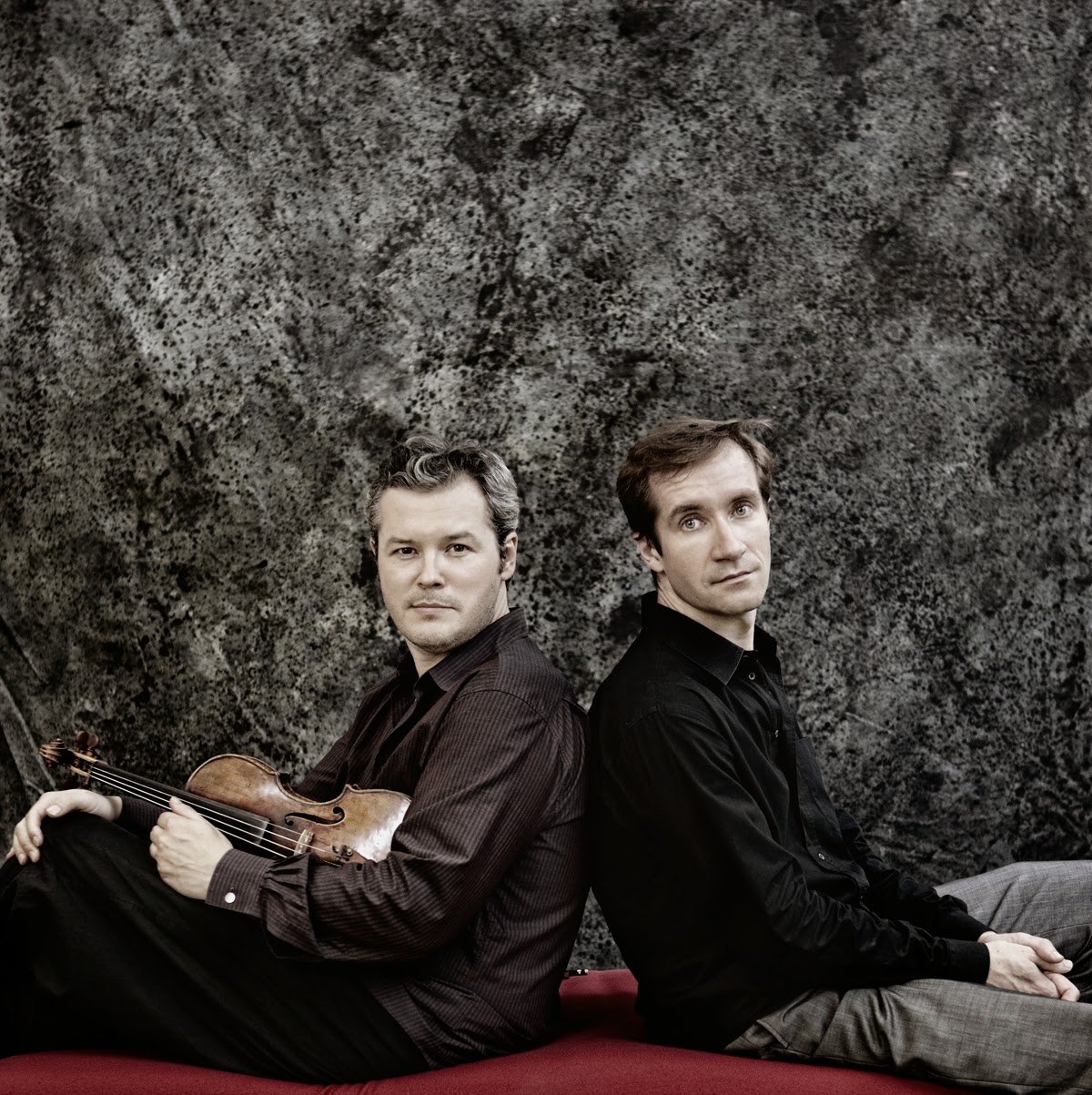
Vadim Repin and Nikolai Lugansky play Franck's Violin Sonata 4th mov. 2004, in Tokyo.