If There Is Much In The Window There Should Be More In The Room

Tuesday, March 25, 2008

Ain't No Sunshine


Bill Withers LIVE, doing one of his biggest hits.


This was Withers' first hit. After spending 9 years in the US Navy, he had a job at a factory making parts for airplanes when he was introduced to Booker T. Jones from Booker T. & the MG's. Booker was an elite session musician with Stax Records, where Otis Redding, Wilson Pickett and many other Soul legends recorded. He brought in some other top-notch musicians, including Stephen Stills on lead guitar, and produced this album for Withers, who was 32 when it was recorded.

All the instruments on this are acoustic.

The part where Withers repeats "I know, I know," has become a very recognizable piece of the song, but it wasn't what he had in mind. Explains Withers:
"I wasn't going to do that, then Booker T. said, 'No, leave it like that.' I was going to write something there, but there was a general consensus in the studio. It was an interesting thing because I've got all these guys that were already established, and I was working in the factory at the time. Graham Nash was sitting right in front of me, just offering his support. Stephen Stills was playing and there was Booker T. and Al Jackson and Donald Dunn - all of the MGs except Steve Cropper. They were all these people with all this experience and all these reputations, and I was this factory worker just sort of puttering around. So when their general feeling was, 'Leave it like that,' I left it like that."


 

Monday, March 24, 2008

ABRONTAN: GALERY


http://www.abrontan.net/index.php?id=32

Experience COLORS-- feel colors in its unrestrained grandiosity....
The scent of colors as portrayed in the gallery of Manouchehr Abrontan....

Saturday, March 15, 2008

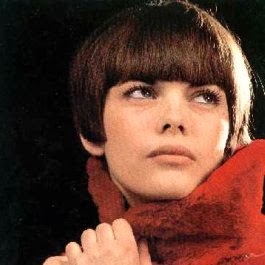
Mireille Mathieu La Vie En Rose


Mireille Mathieu  is a French singer. She is also known as Mimi, Sparrow from Avignon and is classically known for her illustrious French crooning during the '60s and '70s.   

She has recorded over 1200 songs in 11 languages, with 122 million albums (as of 24 November 2005) and more than 50 million singles sold worldwide.


The most revered French vocalist of the 20th century, Edith Piaf continues to influence French artists long after her death. A soulful, moving singer with an impressive range, Mireille Mathieu pays tribute to Piaf's legacy on the superb Chante Piaf. 


This is one of Mimi's signature songs with English subtitles.

".....It's him for me, me for him in life....."

Tuesday, February 26, 2008

Quincy Jones - Moody's Mood For Love 1995


"Moody's Mood for Love" is jazz saxophonist James Moody's 1949 instrumental solo based on Jimmy McHugh's 1935 song "I'm in the Mood for Love" with lyrics later added by Eddie Jefferson.

James Moody created his improvised solo in 1949 on a visit to Sweden. Moody’s version clearly shows the influence of Charlie Parker.In 1952, jazz singer Eddie Jefferson wrote lyrics to this improvisation by Moody, a practice known as vocalese. This particular arrangement of the song did not come to be known by its now common title of "Moody's Mood for Love" until King Pleasure released a very popular vocal version in 1954. 

Following King Pleasure's successful hit version of "Moody's Mood for Love" Jimmy McHugh the original author of "I'm in the Mood for Love" sued for copyright infringement and won a partial victory in court. He and Moody eventually agreed to share the proceeds on sales of any versions of the tune.  King Pleasure's version included vocals by Blossom Dearie as well as instrumental contributions from Teacho and Band.

Other artists who later released renditions of the song include Van Morrison, George Benson, Aretha Franklin from "Hey Now Hey (The Other Side of the Sky)", Queen Latifah, Tito Puente, Kermit Ruffins, The Ray Gelato Giants, Amy Winehouse, Chuck Brown, Mina, The Guess Who and Georgie Fame. In 1995 Quincy Jones released a multi-harmony version of the track with his album Q's Jook Joint featuring the artists Take 6 in collaboration with Brian McKnight.

From Quincy Jones 1995 Q's Jook Joint
Featuring James Moody Brian McKnight Take6 & Rachelle Ferrel


Moody's Mood For Love - Take 6, Brian McKnight, Patti Austin LIVE


James Moody - I'm in the Mood for Love 

Check out this recording of James Moody playing "I'm in the Mood for Love," with a great intro and outro by Dizzy! Thank your for your music, spirit, and genius, James!


Wednesday, January 23, 2008

Mipham - What About Me


http://www.youtube.com/watch?v=FDSAAlrqAHM

This is a video directed by Chewyguru for spoken word artist Mipham.

Mipham records albums, runs marathons and just happens to be a Tibetan Buddhist Lama.

Check out his website http://www.mipham.com


Song © Mipham

Tuesday, January 22, 2008

Rafal Blechacz Chopin - Polonaise in A-flat major, Op. 53 - "Heroique"


Polonaise in A flat Op.53 "Heroic" by Rafal Blechacz

In the Winners' Concert of Chopin Competition 2005. This is from 2005: Rafal took all awards at the 15th Frederic Chopin International Piano Competition, including the Gold Medal, and three special awards for the best performance of a polonaise, a mazurka and a concerto. (Competition judges decided no competitors were worthy of the second prize. Two brothers from South Korea -- Dong Min Lim and Dong Hyek Lim -- were awarded the third prize.) 

Thursday, January 3, 2008

Baden Powell - Samba Triste - Europe by Loronix


Baden Powell de Aquino was born in Varre-e-Sai in the state of Rio de Janeiro, Brazil. 

His father, a scouting enthusiast, named him after Robert Baden-Powell. When he was three, his family relocated to a suburb in the city of Rio de Janeiro. The new surroundings proved profoundly influential. 

His house was a stop for popular musicians during his formative years. He soon started guitar lessons with Jayme Florence, a famous Choro guitarist in the 1940s. He proved a young virtuoso, having won many talent competitions before he was a teenager. At age fifteen, he was already playing professionally, accompanying singers and bands in various styles. As a youngster, he was fascinated by Swing and Jazz, but his main influences were firmly rooted in the Brazilian guitar canon.

He first achieved notoriety in 1959 by convincing Billy Blanco, who was an established singer and songwriter to put lyrics to one of his compositions. The result was called “Samba Triste” and very successful. It has been covered by many artists, including Stan Getz and Charlie Byrd in their seminal LP Jazz Samba.

In 1962, he met the poet-diplomat Vinicius de Moraes and began a collaboration that yielded some true classics of 1960s Brazilian music. Although Bossa Nova was the prevailing sound of the times, the partnership Baden-Vinicius wanted to transcend the form by syncretizing Afro-Brazilian forms such as Candomblé, Umbanda and Capoeira with Rio de Janeiro’s Samba forms.

“Samba Triste” was the first commercial success for its composer, Baden Powell (1937-2000), who is still considered one of Brazil’s greatest guitarists. Like Jobim, Powell wrote songs with the poet Vinicius de Moraes – “Consolao” being one of their most famous – but Powell was more focused on native Brazilian culture and his melodies are darker than Antonio Carlos Jobim’s.


A very early Baden Powell in Europe with a trio playing Samba Triste