Tweet
http://www.ushmm.org/museum/exhibit/online/ssalbum/
In January 2007, the United States Holocaust Memorial Museum Archives received a donation of a photograph album.
The inscription "Auschwitz 21.6.1944" on its first page signaled the uniqueness of the album—there are very few wartime photographs of the Auschwitz concentration camp complex, which included Auschwitz-Birkenau, the largest Nazi killing center.
Though his name does not appear anywhere in the album, the dates of the photographs and various decorations including adjutant cords on the uniform of the album's owner,
Wednesday, April 29, 2009


Thursday, April 23, 2009
THE VIRTUAL AUTOPSY
Tweet
 http://www.le.ac.uk/pa/teach/va/titlpag1.html
The concept of Virtual Autopsy was born 5 years ago when Tim Taylor – a medical student at the University of Leicester, created this site as part of a medical informatics special study module. The project was so big that he was commissioned to complete the site after the end of the study module.
The concept of Virtual Autopsy was born 5 years ago when Tim Taylor – a medical student at the University of Leicester, created this site as part of a medical informatics special study module. The project was so big that he was commissioned to complete the site after the end of the study module.
Monday, April 6, 2009
The Yates Odyssey - TIME
Tweet
http://www.time.com/time/magazine/article/0,9171,1001706-1,00.html
On June 20, 2001, when the police reached this modest brick home on Beachcomber Lane in suburban Houston, they found Andrea drenched with bathwater, her flowery blouse and brown leather sandals soaking wet.
She had turned on the bathroom faucet to fill the porcelain tub and moved aside the shaggy mat to give herself traction for kneeling on the floor. It took a bit of work for her to chase down the last of the children; toward the end, she had a scuffle in the family room, sliding around on wet tile below a poster that proclaimed the epithets of Christ: SAVIOR, SHEPHERD, BISHOP OF SOULS.
http://www.time.com/time/magazine/article/0,9171,1001706-1,00.html
On June 20, 2001, when the police reached this modest brick home on Beachcomber Lane in suburban Houston, they found Andrea drenched with bathwater, her flowery blouse and brown leather sandals soaking wet.
She had turned on the bathroom faucet to fill the porcelain tub and moved aside the shaggy mat to give herself traction for kneeling on the floor. It took a bit of work for her to chase down the last of the children; toward the end, she had a scuffle in the family room, sliding around on wet tile below a poster that proclaimed the epithets of Christ: SAVIOR, SHEPHERD, BISHOP OF SOULS.
Sunday, March 29, 2009
Men Smell Like Cheese, Women Smell Like Onions
Tweet
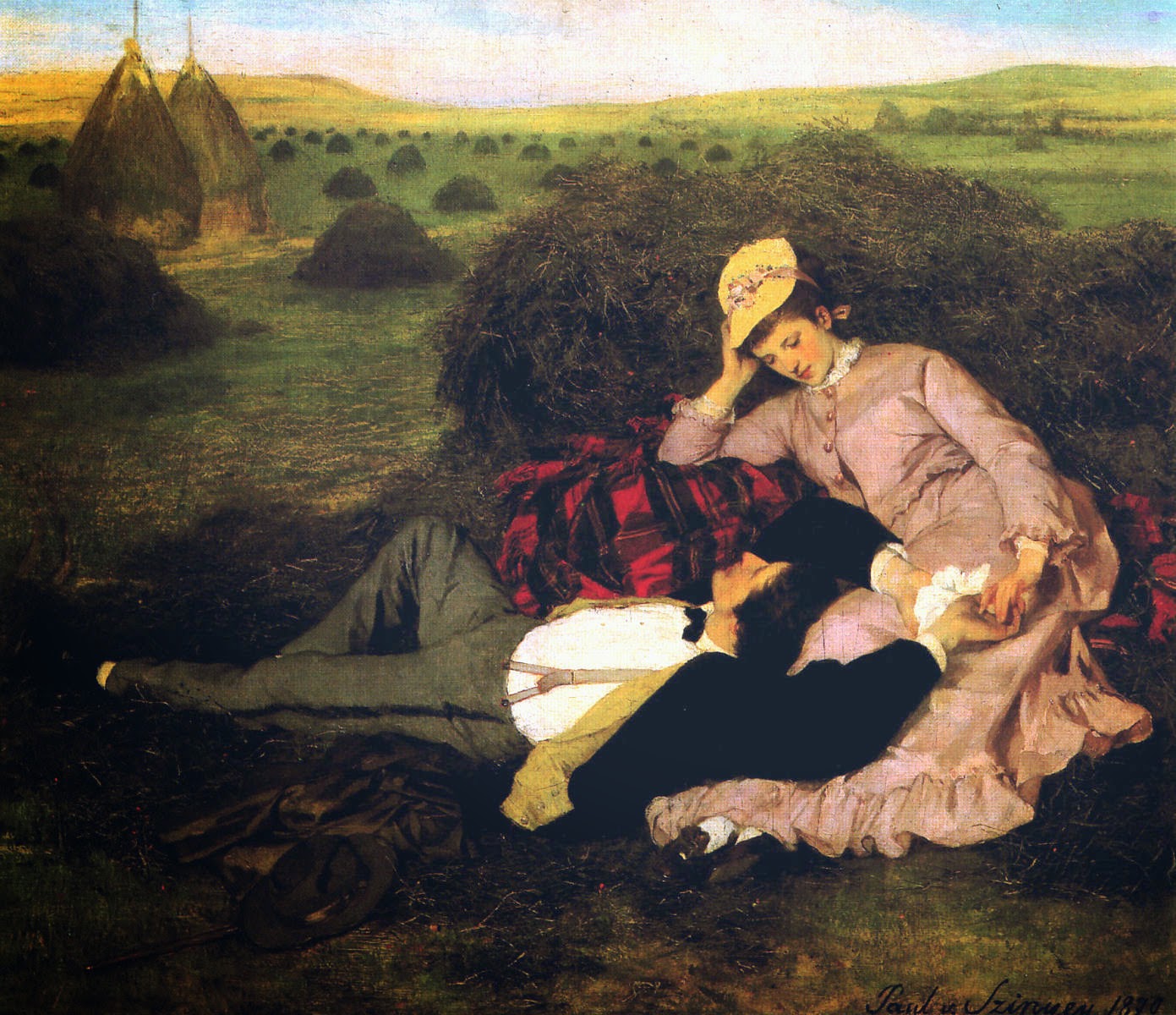
Body odor (BO) is not fun, either in private or social situations. If always present, it must be dealt with daily as BO is the target of endless jokes in bad taste.
But now, there is something new that can be said about this situation - and note that this post is not a joke. A research team inSwitzerland

The sweat from women contained high levels of a sulfur compound that had no odor. The bacteria commonly found in armpits turn this compound into another one known as thiol that smells like onions.
The researchers found marked differences in the sweat from men and women.
"Men smell of cheese, and women of grapefruit or onion," says Christian Starkenmann of Firmenich, a company inGeneva
The team found that the women's armpit sweat contained relatively high levels of an odorless sulphur-containing compound - 5 milligrams per milliliter of sweat versus 0.5 milligrams in men.
When the researchers mixed this compound in the lab with bacteria commonly found in the armpit, the bugs turned it into a thiol - a previously discovered odor from armpits that is akin to onion.
"The more sulphur precursor we added, the more intense was the malodor," says Starkenmann, whose team's results appear in Chemical Senses (DOI: 10.1093/chemse/bjn076). Bacterial enzymes turn the otherwise odorless precursor into the malodor.
The men, meanwhile, had relatively high levels of an odorless fatty acid which turned into a cheesy odor when exposed to the same types of bacteria. The balance of oniony to cheesy precursors in women's sweat made it smell worse than men's as rated by independent smell assessors.

Chemicals in men's bodies can cause their female sex partners to be more fertile, have more regular menstrual cycles and milder menopause, landmark research shows. And women who have sex with men at least once a week benefit most from the chemicals, which apparently work through the sense of smell.
"The exciting part is the effect we have on each other. Men are important to women," says Dr. Winnifred B. Cutler ofPhiladelphia
*Women with unusually long or short menstrual cycles get closer-to-average cycles after regularly inhaling male essence, described as a compound of male sweat, hormones and natural body odors. "You just walk into a male locker room," Cutler says, "that's the odor."
*Women exposed to another woman's "female essence" menstruated at the same time after a few months, confirming a long-observed phenomenon that women who live together menstruate at the same time.
Cutler's other studies show women who have sex with men at least once a week have regular menstrual cycles and fewer fertility and menopause problems, apparently because of exposure to pheromones....
Many factors will influence the production of BO in both men and women: diet and supplements, soaps and trace elements in washing water, family and ethnic group genetics, local climate and the material used in clothing. Plastic clothing made from synthetic fibers such as polyester is well known to cause excessive sweating in many people.
This Swiss research could lead to new deodorants and pharmaceuticals to block the synthesis of thiol in women and the fatty acid or armpit molecular in men.
Compounds might be synthesized that prevent armpit bacteria from converting the odorless precursor molecules into compounds that smell like onions or cheese.
At the end of the day, however, all is not negative. Without any deliberate thought, a woman cooking and eating a cheeseburger or grilled cheese sandwich might notice a pleasant sensation unrelated to favorite food odors.

A ‘cheesy’ smell might call forth pleasant thoughts and feelings about a favorite man in her life.
The male armpit molecule that smells cheesy has a representative in any grilled cheese sandwich.
Men, when smelling onions, may have a similar, evocative reaction.

Who would have ever imagined that onions and cheese could be emitting human pheromone analogs?
Sources:
newscientist.com
athena.science
bennet
Men Smell Like Cheese, Women Smell Like Onions
Body odor (BO) is not fun, either in private or social situations. If always present, it must be dealt with daily as BO is the target of endless jokes in bad taste.
But now, there is something new that can be said about this situation - and note that this post is not a joke. A research team in
The sweat from women contained high levels of a sulfur compound that had no odor. The bacteria commonly found in armpits turn this compound into another one known as thiol that smells like onions.
 |
| Christian Starkenmann |
The researchers found marked differences in the sweat from men and women.
"Men smell of cheese, and women of grapefruit or onion," says Christian Starkenmann of Firmenich, a company in
The team found that the women's armpit sweat contained relatively high levels of an odorless sulphur-containing compound - 5 milligrams per milliliter of sweat versus 0.5 milligrams in men.
When the researchers mixed this compound in the lab with bacteria commonly found in the armpit, the bugs turned it into a thiol - a previously discovered odor from armpits that is akin to onion.
"The more sulphur precursor we added, the more intense was the malodor," says Starkenmann, whose team's results appear in Chemical Senses (DOI: 10.1093/chemse/bjn076). Bacterial enzymes turn the otherwise odorless precursor into the malodor.
The men, meanwhile, had relatively high levels of an odorless fatty acid which turned into a cheesy odor when exposed to the same types of bacteria. The balance of oniony to cheesy precursors in women's sweat made it smell worse than men's as rated by independent smell assessors.
Chemicals in men's bodies can cause their female sex partners to be more fertile, have more regular menstrual cycles and milder menopause, landmark research shows. And women who have sex with men at least once a week benefit most from the chemicals, which apparently work through the sense of smell.
"The exciting part is the effect we have on each other. Men are important to women," says Dr. Winnifred B. Cutler of
*Women with unusually long or short menstrual cycles get closer-to-average cycles after regularly inhaling male essence, described as a compound of male sweat, hormones and natural body odors. "You just walk into a male locker room," Cutler says, "that's the odor."
*Women exposed to another woman's "female essence" menstruated at the same time after a few months, confirming a long-observed phenomenon that women who live together menstruate at the same time.
Cutler's other studies show women who have sex with men at least once a week have regular menstrual cycles and fewer fertility and menopause problems, apparently because of exposure to pheromones....
Many factors will influence the production of BO in both men and women: diet and supplements, soaps and trace elements in washing water, family and ethnic group genetics, local climate and the material used in clothing. Plastic clothing made from synthetic fibers such as polyester is well known to cause excessive sweating in many people.
This Swiss research could lead to new deodorants and pharmaceuticals to block the synthesis of thiol in women and the fatty acid or armpit molecular in men.
Compounds might be synthesized that prevent armpit bacteria from converting the odorless precursor molecules into compounds that smell like onions or cheese.
At the end of the day, however, all is not negative. Without any deliberate thought, a woman cooking and eating a cheeseburger or grilled cheese sandwich might notice a pleasant sensation unrelated to favorite food odors.
A ‘cheesy’ smell might call forth pleasant thoughts and feelings about a favorite man in her life.
The male armpit molecule that smells cheesy has a representative in any grilled cheese sandwich.
Men, when smelling onions, may have a similar, evocative reaction.
Who would have ever imagined that onions and cheese could be emitting human pheromone analogs?
Sources:
newscientist.com
athena.science
bennet
Saturday, March 28, 2009
Concierto de Aranjuez John Williams BBC Proms 2005
Tweet

The Concierto de Aranjuez was inspired by the gardens at Palacio Real de Aranjuez, the spring resort palace and gardens built by Philip II in the last half of the 16th century and rebuilt in the middle of the 18th century by Ferdinand VI.

The work attempts to transport the listener to another place and time through the evocation of the sounds of nature.
According to the composer, the first movement is "animated by a rhythmic spirit and vigour without either of the two themes... interrupting its relentless pace";
the second movement "represents a dialogue between guitar and solo instruments (cor anglais, bassoon, oboe, horn etc.)"; and the last movement "recalls a courtly dance in which the combination of double and triple time maintains a taut tempo right to the closing bar."
He described the concerto itself as capturing "the fragrance of magnolias, the singing of birds, and the gushing of fountains" in the gardens of Aranjuez.
Some say that the second movement was inspired by the bombing of Guernica in 1937.
In her autobiography, the composer's wife Victoria maintains that it was both an evocation of the happy days of their honeymoon and a response to Rodrigo's devastation at the miscarriage of their first pregnancy.
Rodrigo dedicated the Concierto de Aranjuez to Regino Sainz de la Maza.
Rodrigo, blind since age three, was a pianist. He did not play the guitar, yet he still managed to capture the spirit of the guitar in Spain.
Composition
Composed in early 1939, in Paris, amid the tensions of the pending war, it was the first work Rodrigo had written for guitar and orchestra.
The instrumentation is unusual: rarely does the guitar face the forces of a full orchestra. However, the guitar is never overwhelmed, remaining the solo instrument throughout.
Movements
This concerto is in three movements, Allegro con spirito, Adagio and Allegro gentile.
The second movement, the best-known of the three, is marked by its slow pace and quiet melody, introduced by the English horn, with a soft accompaniment by the guitar and strings. A feeling of quiet regret permeates the piece.
Ornamentation is added gradually to the melody in the beginning. An off-tonic trill in the guitar creates the first seeds of tension in the piece; they grow and take hold, but relax back to the melody periodically.
Eventually, a climactic build-up starts. This breaks back into the main melody, molto appassionato, voiced by the strings with accompaniment from the woodwinds.
The piece finally resolves to a calm arpeggio from the guitar, though it is the strings in the background rather than the guitar’s final note that resolve the piece. The third movement is in mixed metre, alternating between 2/4 and 3/4.
John Williams, guitar
BBC Symphony Orchestra
Paul Daniel, conductor,
Royal Albert Hall, 10 September, 2005

The Concierto de
Aranjuez is a composition for classical guitar and orchestra by the Spanish
composer Joaquín Rodrigo. Written in 1939, it is probably Rodrigo's best-known
work, and its success established his reputation as one of the most significant
Spanish composers of the twentieth century.
The Concierto de Aranjuez was inspired by the gardens at Palacio Real de Aranjuez, the spring resort palace and gardens built by Philip II in the last half of the 16th century and rebuilt in the middle of the 18th century by Ferdinand VI.

The work attempts to transport the listener to another place and time through the evocation of the sounds of nature.
According to the composer, the first movement is "animated by a rhythmic spirit and vigour without either of the two themes... interrupting its relentless pace";
the second movement "represents a dialogue between guitar and solo instruments (cor anglais, bassoon, oboe, horn etc.)"; and the last movement "recalls a courtly dance in which the combination of double and triple time maintains a taut tempo right to the closing bar."
He described the concerto itself as capturing "the fragrance of magnolias, the singing of birds, and the gushing of fountains" in the gardens of Aranjuez.
Some say that the second movement was inspired by the bombing of Guernica in 1937.
In her autobiography, the composer's wife Victoria maintains that it was both an evocation of the happy days of their honeymoon and a response to Rodrigo's devastation at the miscarriage of their first pregnancy.
Rodrigo dedicated the Concierto de Aranjuez to Regino Sainz de la Maza.
Rodrigo, blind since age three, was a pianist. He did not play the guitar, yet he still managed to capture the spirit of the guitar in Spain.
Composition
Composed in early 1939, in Paris, amid the tensions of the pending war, it was the first work Rodrigo had written for guitar and orchestra.
The instrumentation is unusual: rarely does the guitar face the forces of a full orchestra. However, the guitar is never overwhelmed, remaining the solo instrument throughout.
Movements
This concerto is in three movements, Allegro con spirito, Adagio and Allegro gentile.
The second movement, the best-known of the three, is marked by its slow pace and quiet melody, introduced by the English horn, with a soft accompaniment by the guitar and strings. A feeling of quiet regret permeates the piece.
Ornamentation is added gradually to the melody in the beginning. An off-tonic trill in the guitar creates the first seeds of tension in the piece; they grow and take hold, but relax back to the melody periodically.
Eventually, a climactic build-up starts. This breaks back into the main melody, molto appassionato, voiced by the strings with accompaniment from the woodwinds.
The piece finally resolves to a calm arpeggio from the guitar, though it is the strings in the background rather than the guitar’s final note that resolve the piece. The third movement is in mixed metre, alternating between 2/4 and 3/4.
John Williams, guitar
BBC Symphony Orchestra
Paul Daniel, conductor,
Royal Albert Hall, 10 September, 2005
Subscribe to:
Posts (Atom)