If There Is Much In The Window There Should Be More In The Room

Showing posts with label 1. Show all posts

Sunday, February 10, 2013

Gala from Berlin


Gala from Berlin

Sir Simon Rattle conducts "Gala from Berlin" featuring
Lang Lang and the Berliner Philharmoniker


You don't need a passport to see the Berliner Philharmoniker, conducted by Sir Simon Rattle and featuring piano superstar Lang Lang! In this encore HD broadcast from the Philharmoniker's home concert hall in Berlin - the Philharmonie - the world-renown orchestra presents works by two Russian composers:
Sergei Rachmaninov's Second Piano Concerto highlights Lang Lang's virtuosity and the Philharmoniker's supple orchestral sound. The Nutcracker Suite by Piotr Ilych Tchaikovsky completes the program.

Russian composer, pianist, and conductor Sergei Wassiljewitsch Rachmaninoff
(1. April 1873 – 28. March 1943) completed his second piano concerto in 1901 after a long period of stagnation and depression, caused by the failure of his 1. piano concerto. In 1900 he started a hypnosis therapy with the Russian psychologist Dr. Nikolai Dahl (1860 – 1939) and Rachmaninoff began to recover his confidence. As it was Dr. Nikolai Dahl, who persuaded and convinced him to go on with his compositional work, the piano concerto No.2, which was a big success, is dedicated to Dr. Nikolai Dahl. 

In this version, the piano is played by the young, Chinese shooting star Lang Lang, who got his first piano lessons at the age of just 3 years. Lang Lang became one of the most renowned and famous pianists of the 21th century and has been honored with an abundance of awards, but he is also under fire from all sides. Some critics have given him the nickname Bang Bang, criticizing that his playing is vulgar and lacks sensitivity. 

Others have described him as immature, though praised his ability to conquer crowds with youthful bravado. While some of these critics seem to grudge his enormous popularity and success, others praise the young talent, like the Chinese conductor Jahja Ling (born 25 October 1951), who remarked, “Lang Lang is special because of his total mastery of the piano… He has the flair and great communicative power.”


The Berliner Philharmoniker and pianist Lang Lang perform Sergei Rachmaninov: Piano Concerto No. 2 in C minor, Op. 18
Frédéric Chopin: Etude No. 1, Op. 25


Friday, July 20, 2012

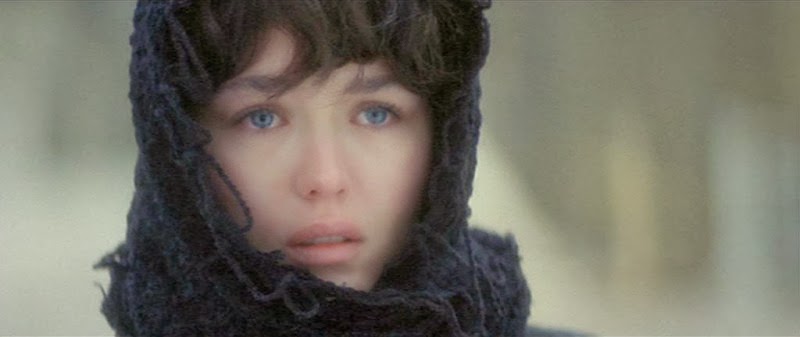
Camille Claudel (1988) ~1~


Camille Claudel is a 1988 French film about the life of the 19th century female sculptor Camille Claudel. The movie was based on the book by Reine-Marie Paris, granddaughter of Camille's brother, the poet and diplomat Paul Claudel. It was directed by Bruno Nuytten, co-produced by Isabelle Adjani, and starred her and Gérard Depardieu. The film had a total of 2,717,136 admissions in France. 


The film recounts the troubled life of French sculptor Camille Claudel and her long relationship with legendary sculptor Auguste Rodin. Beginning in the 1880s with a young Claudel's first meeting with Rodin, the film traces the development of their intense romantic bond.

The growth of this relationship coincides with the rise of Claudel's career, helping her overcome prejudices against female artists. However, their romance soon sours, due to the increasing pressures of Rodin's fame and his love for another woman.

These difficulties combine with her increasing doubts about the value of her work to drive Claudel into an emotional tumult that threatens to become insanity.

1989 - Nominated for two Academy Awards: Academy Award for Best Actress and Academy Award for Best Foreign Language Film.
1989 - Received five César Awards, including the César Awards for Best Film and Best Actress.
1989 - Isabelle Adjani received the Silver Bear for Best Actress at the 39th Berlin International Film Festival

Camille Claudel (8 December 1864 -- 19 October 1943) was a French sculptor and graphic artist. She was the elder sister of the poet and diplomat Paul Claudel.

http://stagevu.com/video/pdkpzggrrfcn


This is not a movie about sculpture. Those who have seen Camille Claudel's work report that some of it has a power that is almost disturbing - that there is an urgency in her figures suggesting she was not simply shaping them, but using them to bring her own emotions to life. The film "Camille Claudel" is more concerned with her personality and passions than with her art, and so it is hard to judge, from the evidence on the screen, how good a sculptor she really was.


She is above all a lonely woman, because she chooses to do with her life what her society says no decent woman should do. She chooses to love who she will, and she wants to be an artist - to create sculptures out of clay, just as if she were a man. It is hard to say which of her choices is the most offensive. And when she goes mad, it is impossible to say whether the seeds of madness were there from the beginning, or whether she was driven to madness by a society that could not accept a woman who lived for herself.


Camille Claudel has until now occupied only the footnotes of late 19th century art. She was one of the mistresses of Auguste Rodin, the willful sculptor who is known to everyone, if only for "The Thinker." She was often his model, and for a time she worked as his collaborator. She left behind many sculptures, which can be seen here or there, not much remarked, while Rodin's work has been enshrined in the pantheon. She spent the last 30 years of her life in a madhouse.-  Roger Ebert


*Media belong to their respective copyright owners/sources/distributors and appear here as fair use. This page is solely informational and educational and intended for no other purpose than that as well as being not for profit*


Source:
RADolanko
stagevu.com