If There Is Much In The Window There Should Be More In The Room

Thursday, July 3, 2014

A Solitary World


A Solitary World

A Breathtaking Homage to H.G. Wells from a New Genre of Cinematic Poetry


“What is this spirit in man that urges him forever to depart from happiness, to toil and to place himself in danger?”


HG Wells is considered one of the fathers of science fiction. He had "encouraged fantastical thinking about what is possible, on this planet and beyond". Many of the futuristic inventions and scenarios Wells dreamed up in his novels have indeed come true, while others remain the stuff of science fiction.
 

From PBS Digital Studios and filmmaker
James W. Griffiths comes A Solitary World — a breathtaking homage to H.G. Wells, with text adapted from five of his most celebrated works:

The Time Machine (1895), The Island of Dr. Moreau (1896), The First Men in the Moon (1901), In The Days of the Comet (1906), The World Set Free (1914). Read by Terry Burns and featuring an appropriately haunting score from the young British composer Lennert Busch, the film belongs to — pioneers, perhaps — an emerging creative genre: the cinematic poem.


“A horrible feeling of desolation pinched my heart. I listened rigid but heard nothing but the creep of blood in my ears. Great and shadowy and strange was the world and I drifted solitary through its vast mysteries.

A remote faint question, where I might be, drifted and vanished again in my mind. I found myself standing astonished, my emotions penetrated by something I could not understand. 

I felt naked. I felt as perhaps a bird may feel in the clear air knowing the hawk wings above and will swoop. 

I began to feel the need of fellowship. I wanted to question, wanted to speak, wanted to relate my experience. What is this spirit in man that urges him forever to depart from happiness, to toil and to place himself in danger? 

It was this restlessness, this insecurity perhaps that drove me further and further afield in my exploring expedition. As the hush of the evening crept over the world, the sun touched the mountains and became very swiftly a blazing hemisphere of liquid flame, and sank. 

Then, slow and soft and wrapping the world in fold after fold of deepening blue, came the night. And then, the splendor of the sight — in the sky, one bright planet shone kindly and steadily like the face of an old friend. The full temerity of my voyage suddenly came upon me. At last I began to feel the pull of the earth upon my being, drawing me back again to the life that is real, for men.”


Director, Producer, VFX Artist & Colourist:
James W. Griffiths


Director of Photography:
Christopher Moon


Editor:
Marianne Kuopanportti


Sound Design & Mix:
Mauricio D'Orey


Composer:
Lennert Busch


Narrator:
Terry Burns

PBS Digital Studios Original Shorts Series Producer:
Matt Vree


Source:
brainpickings.org

Friday, June 6, 2014

Watery Expression ~ the Silent Evolution


16-sculpture-modern-art-jason-decaires-taylor-sculpture
Watery Expression ~ the Silent Evolution


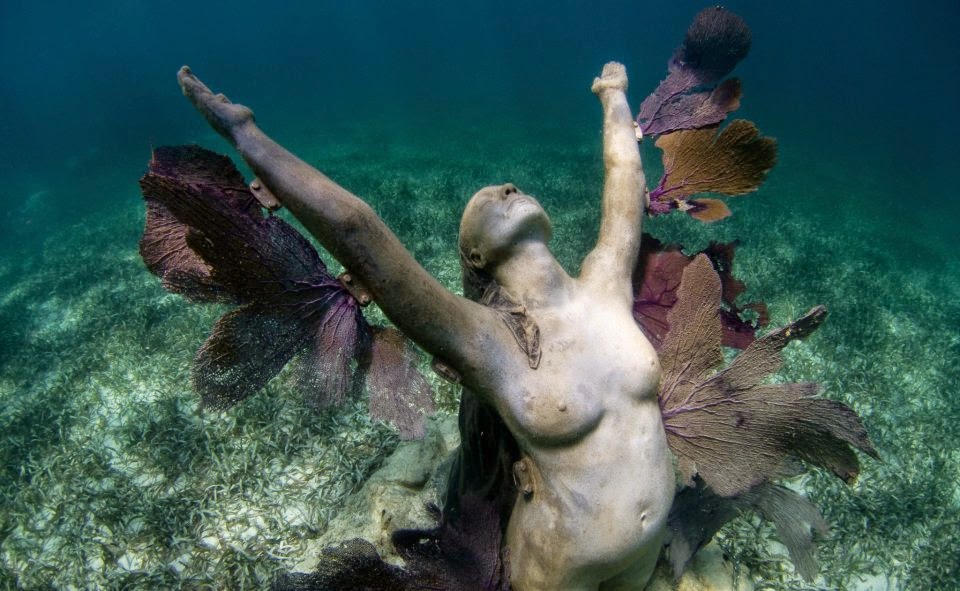
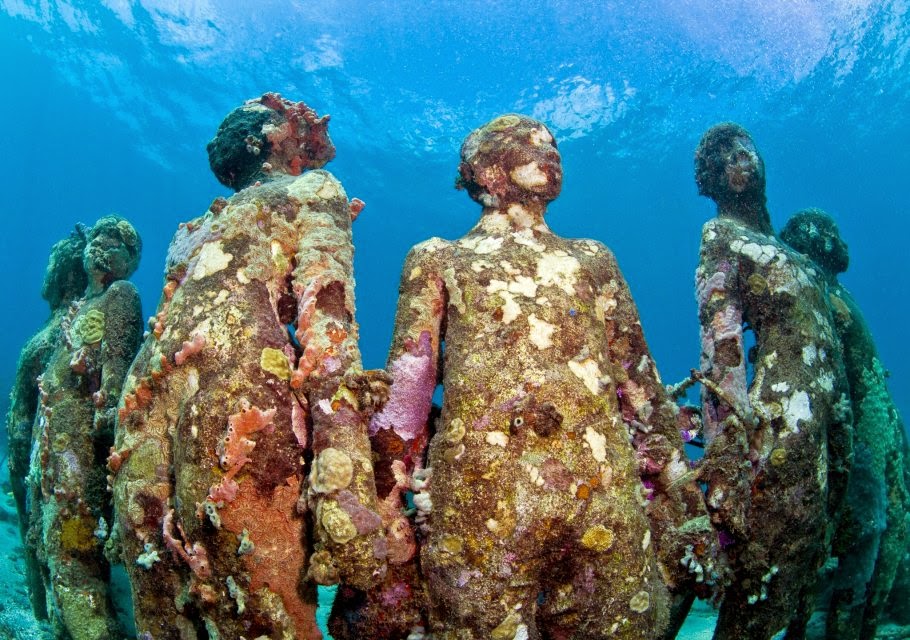
Is it the closed eyes, the surrounding blue hue of the sea, or perhaps the emotions the lifeless sculptures still seem to express? In all its beauty there’s something a bit eerie about this kind of art. Called “awe-inspiring” and “surreal” by the L.A. Times, the exhibit of sculptures of people standing silently on the ocean’s floor, eyes closed, and heads tilted towards the surface. 

The experience of being underwater is vastly different from that of being on land. There are physical and optical considerations that must be taken into account. Objects appear twenty five percent larger underwater, and as a consequence they also appear closer. 

Colors alter as light is absorbed and reflected at different rates, with the depth of the water affecting this further. The light source in water is from the surface, this produces kaleidoscopic effects governed by water movement, currents and turbulence. Water is a malleable medium in which to travel enabling the viewer to become active in their engagement with the work. The large number of angles and perspectives from which the sculptures can be viewed increase dramatically the unique experience of encountering the works.

Art is made for others to see, so one might question why an artist might choose to create it in a place where no one would: Other than fish, that is.

Or, in Jason deCaires Taylor's case, he might question why he would do it any other way. After all, thousands of people have flocked to see his work ever since he started creating it in 2006. That was when Taylor created his first underwater sculpture park off the coast of Grenada in the West Indies. It's since been named one of the 25 wonders of the world by National Geographic Magazine.

A one-of-a-kind blend of art, nature, and conservation, The Underwater Museum re-creates an awe-inspiring dive into the dazzling under-ocean sculpture parks of artist Jason deCaires Taylor.

artist-with-his-work

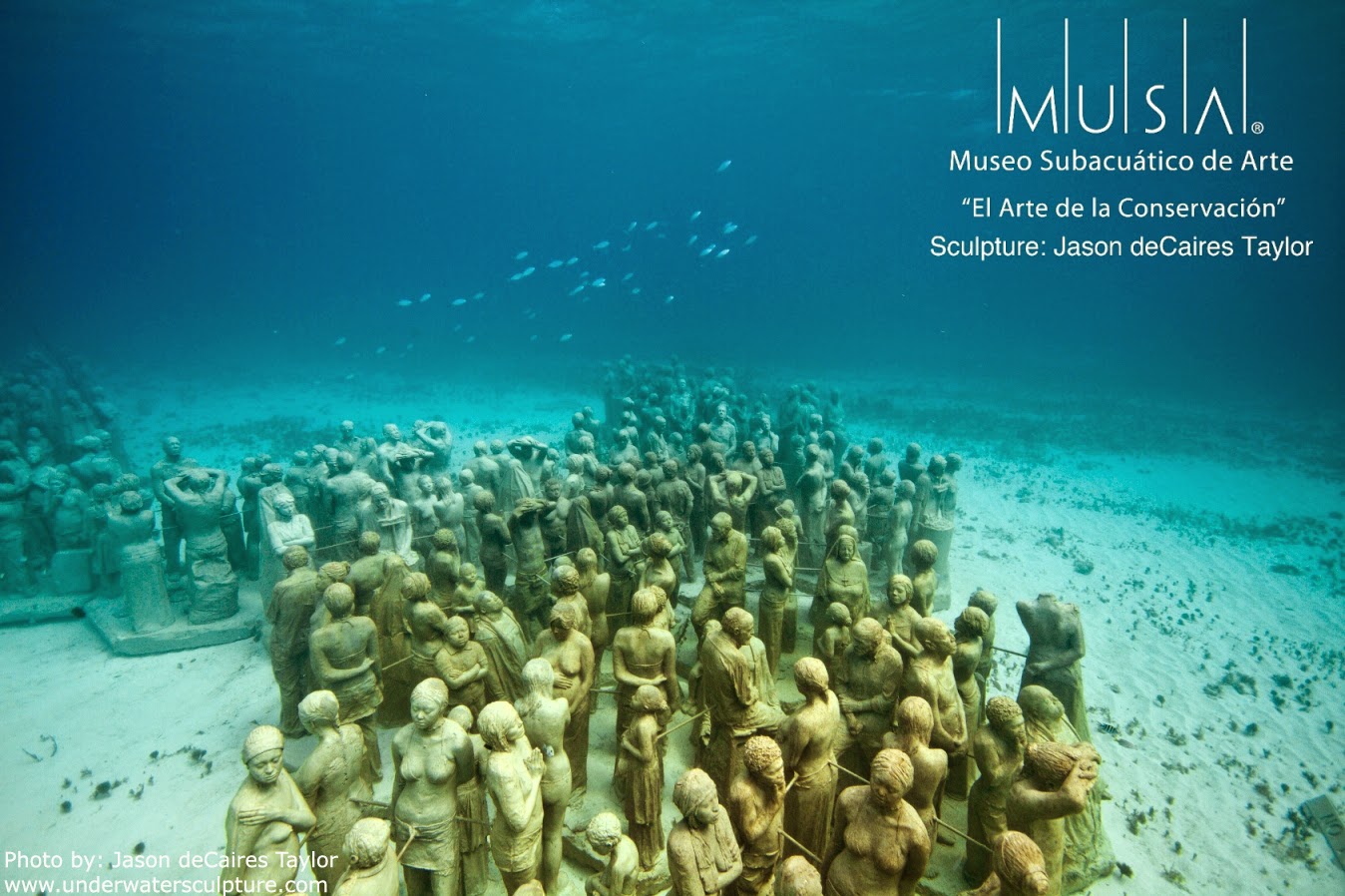
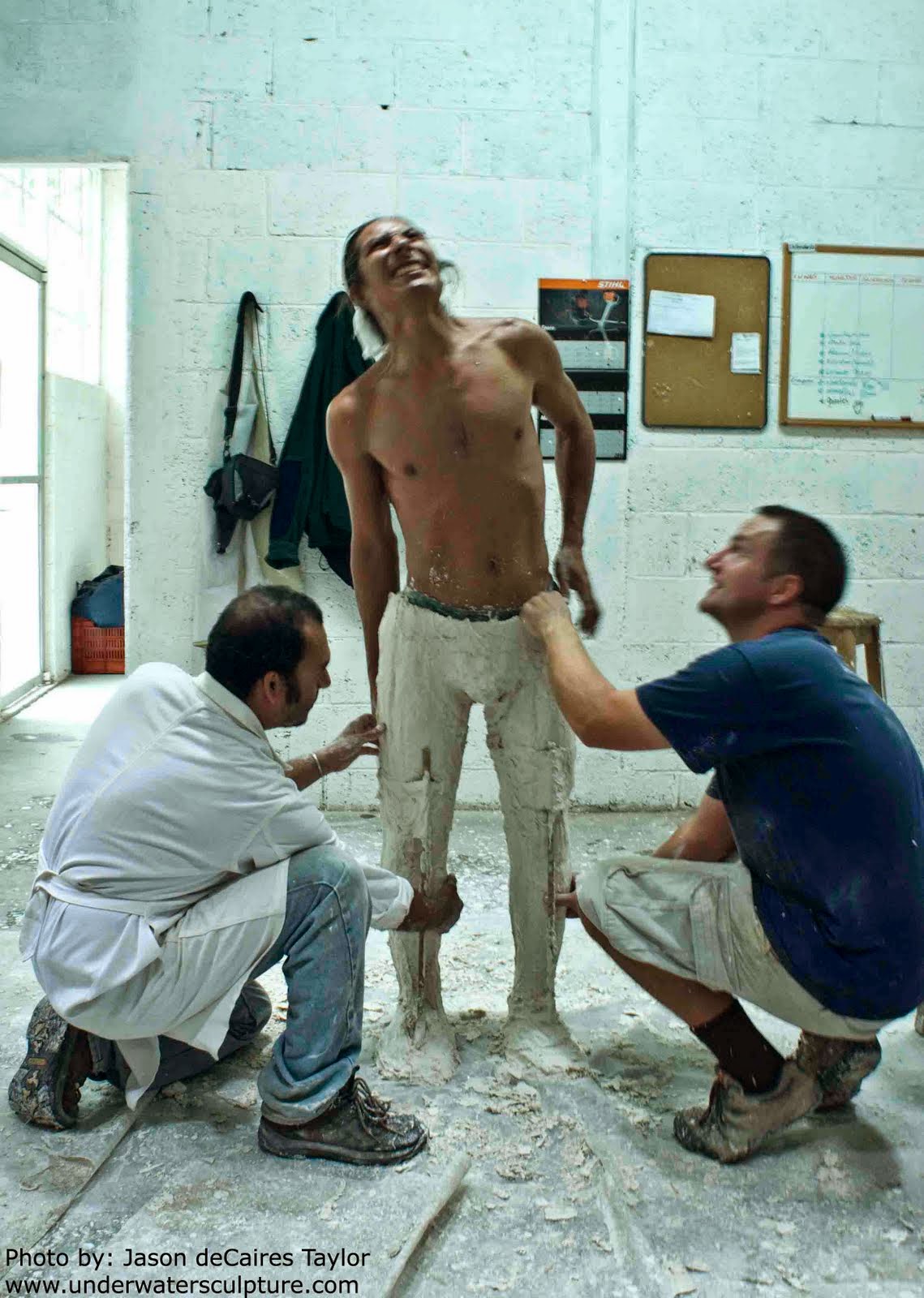
Taylor's sculptures depict humans in dozens of different expressions, from single statues to multitudes. He creates them on land, and then, each statue is lowered into the sea. To date, he has created nearly 600 sculptures that act as artificial reefs for sea life, and has no intention of stopping anytime soon.

Jason deCaires Taylor’s underwater sculptures create a unique, absorbing and expansive visual seascape. Highlighting natural ecological processes Taylor’s interventions explore the intricate relationships that exist between art and environment. 

Taylor-at-work1

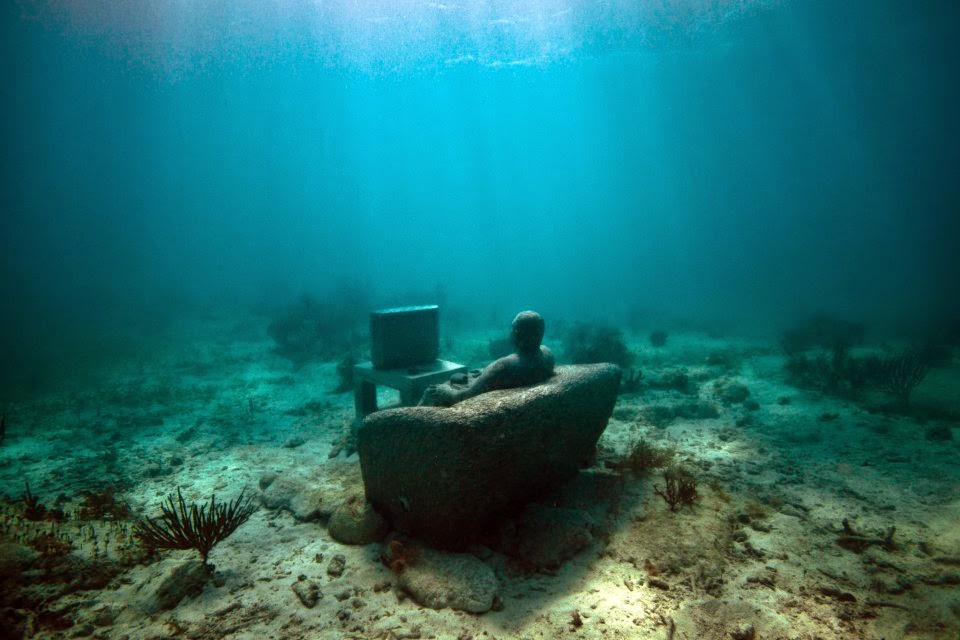
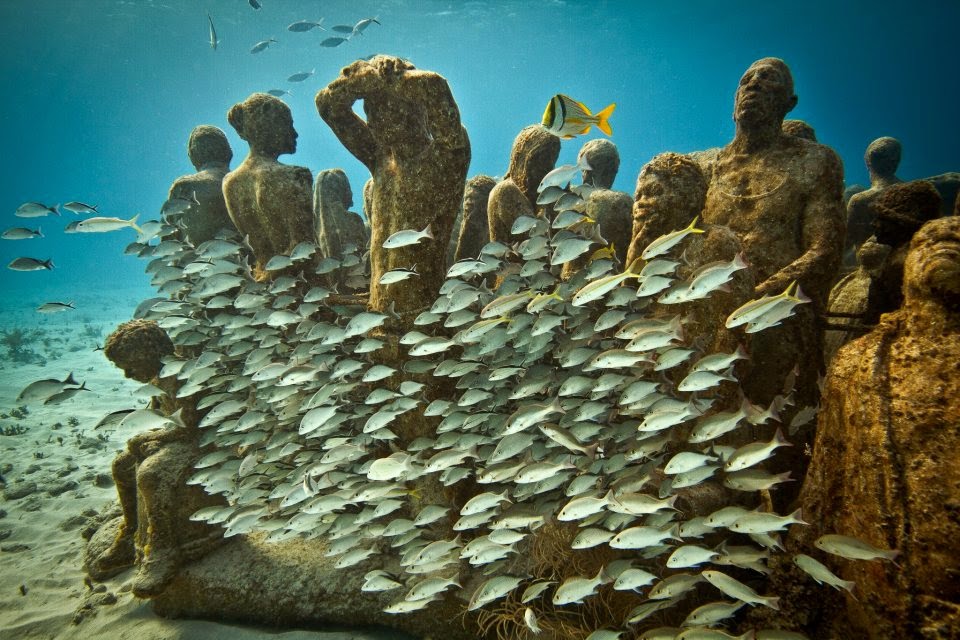
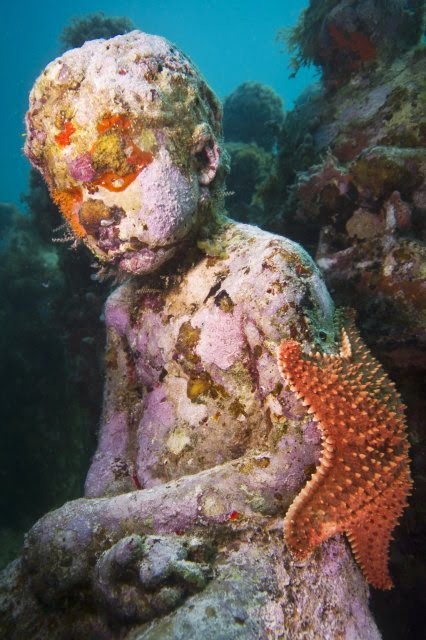
There, over time, the artworks attract corals, algae, and fish, and evolve into beautiful and surreal installations that are also living reefs. His works become artificial reefs, attracting marine life, while offering the viewer privileged temporal encounters, as the shifting sand of the ocean floor, and the works change from moment to moment.

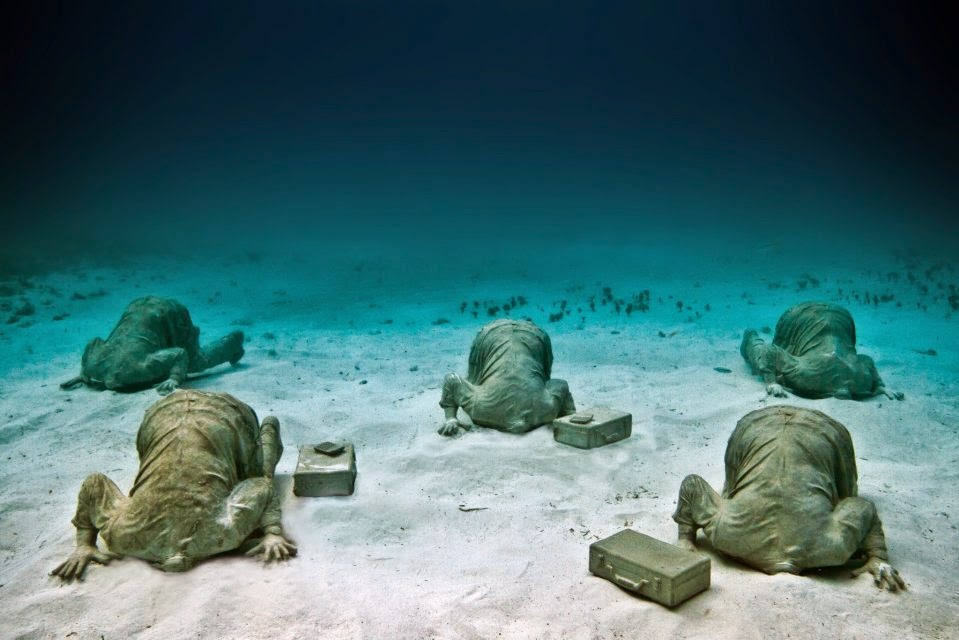
Silent-Evolution

Located off the coast of Cancun, Mexico, artist Jason deCaires Taylor has created an incredible artificial reef of statues he calls the Silent Evolution. A compelling installation that took several months to complete, Silent Evolution embodies a spirit that shifts between sadness and awe, all while reminding us of the intricate relationship between man and nature. With nearly 600 life-size human sculptures installed 9 meters below sea level, Silent Evolution plays many roles, but it is foremost an artificial reef encouraging the growth of marine life. 

Coral reefs are under assault all over the globe. Sewage and agricultural run-off from coastal areas poison many reefs via toxic algae blooms that can cut off their much-need oxygen supply. Human visitors also cause extensive damage by literally knocking into the ecosystems, breaking off pieces of souvenir coral, and dragging boats and anchors across its fragile surfaces.

We probably don’t have to mention the life-threatening conditions natural reefs are under today due to human behavior. However, artificial reefs, which are quite a new phenomenon, have proved to be a very good alternative as they are durable, environmentally friendly and offer relief to the natural ones as they can regenerate. 

body-building

Taylor’s sculptures are created with a pH-neutral concrete, reinforced with fiberglass, which (surprisingly) attracts marine life. 

Taylor also ‘rescues’ coral damaged in storms or by humans, and replants these on his sculptures. 

Made from environmentally friendly materials, deCaires Taylor’s sculpture promotes awareness of the plight of coral. The artist says his sculpture garden in Mexico is only in the first stages of development.


As he told the Los Angeles Times, “I would also like to point out that this installation is by no means over and the second phase is dependent on nature’s artists of the sea, to nurture, evolve and apply the patina of life.”


One of the most interesting things about the sculptures is how they change underwater as they are altered by the force of water and undersea creatures. Taylor tells HLNtv that sometimes he loves the results, and sometimes they change the figures in ways he doesn't like at all.

"But that's a part of it, letting whatever will happen, happen," he says.
Taylor recently relocated from Cancun to the Canary Islands, where he has a whole lot of water calling his name. "I'm not going to be filling up the Atlantic Ocean anytime soon," he told HLNtv, a smile in his voice.

family
Taylor loves creating the statues, there's a certain process to moving them to their watery home that requires a bit of courage.
"As soon as you put them in the water, it's like letting them go," he said. "You know they'll change. And I love watching them change."

Taylor’s message can be read in many different ways and voices, but what he does succinctly is to remind us of our close relation to – and not to mention dependency on – nature.

He says, “You can use sculpture art as a way of conveying hope... providing hope for the future and inspiring people to think about their role on the planet.” 
As deCaires Taylor shared with the Times, the exhibit has “taken 18 months, required 120 tons of cement, sand and gravel, 3,800m of fiberglass, 400kg of silicone, 8,000 miles of red tape, 120 hours working underwater and $250,000.”

at-work

These types of underwater projects have made Jason deCaires Taylor both a name and reputation. With a background in graffiti art and scuba diving, Taylor developed an interest for the relationship between art and the environment early on, and now creates pieces that are both long-lasting and intellectually challenging. Moreover, his thoughtful placement in the shallow and crystal-clear waters of The National Marine Park of Cancun, Mexico, makes the piece very accessible to divers and tourists.

Sculptor Jason deCaires Taylor has been hard at work creating art beneath the sea for the past eight years. Take a look beneath the waves to see his vision.


03-overview-inertia-mexico-jason-decaires-taylor-sculpture
04-overview-ring-of-children-grenada-jason-decaires-taylor-sculpture
05-overview-silent-evolution-mexico-jason-decaires-taylor-sculpture

07-overview-ring-of-children-grenada-jason-decaires-taylor-sculpture
11-overview-ring-of-children-grenada-jason-decaires-taylor-sculpture
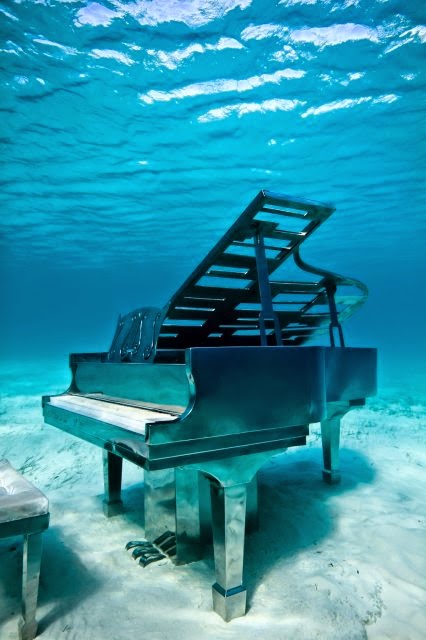
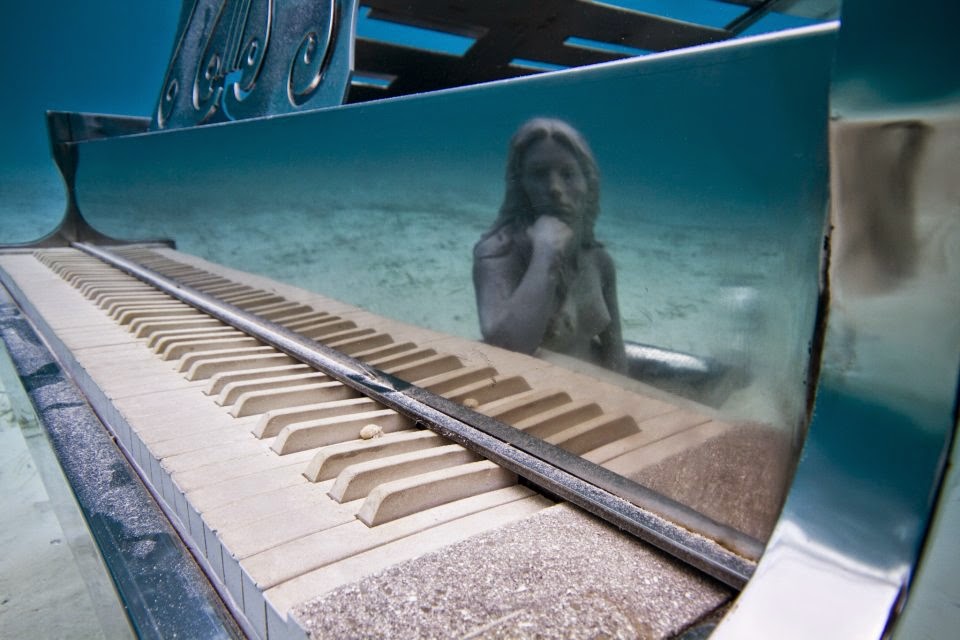
14-overview-piano-bahamas-jason-decaires-taylor-sculpture
15-overview-silent-evolution-mexico-jason-decaires-taylor-sculpture
16-overview-evolution-mexico-jason-decaires-taylor-sculpture

19-overview-jason-decaires-taylor-sculpture

20-overview-piano-bahamas-jason-decaires-taylor-sculpture


Wednesday, June 4, 2014

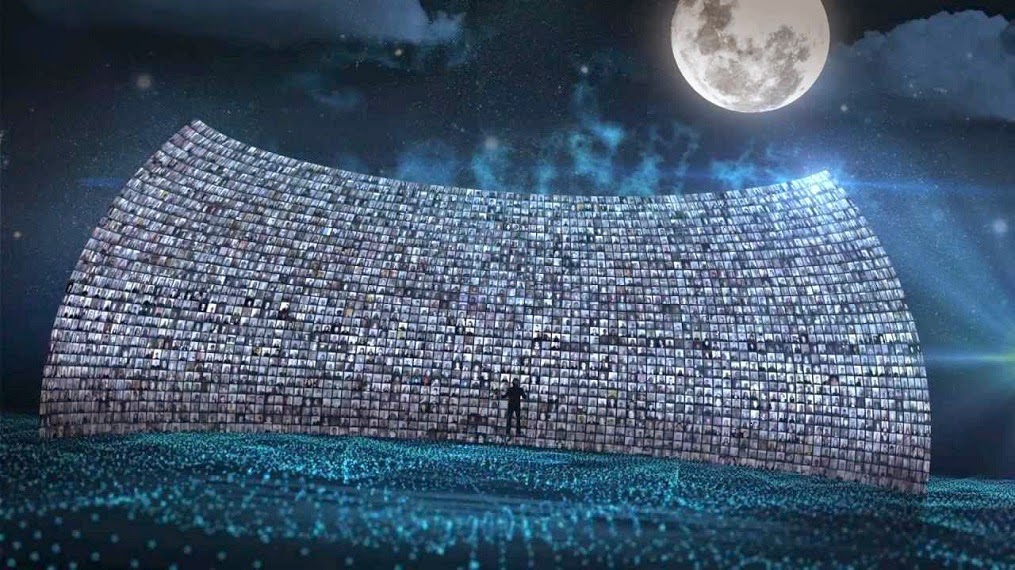
'Water Night' Eric Whitacre's Virtual Choir 3


'Water Night' Eric Whitacre's Virtual Choir 3


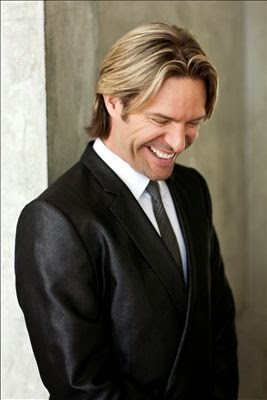
Eric Whitacre is an American composer best known for his choral music. He has also written a large number of wind band compositions and some electronic music. In addition, he has composed works for orchestra and an opera, Paradise Lost: Shadows and Wings. 


His style is quite approachable and features trademark chords (sevenths and ninths, sometimes heard against a background of sustained seconds and fourths), unexpected chord progressions, aleatoric elements, finger snapping by choral singers, and a host of other typically recognizable characteristics. 


Friday, May 23, 2014

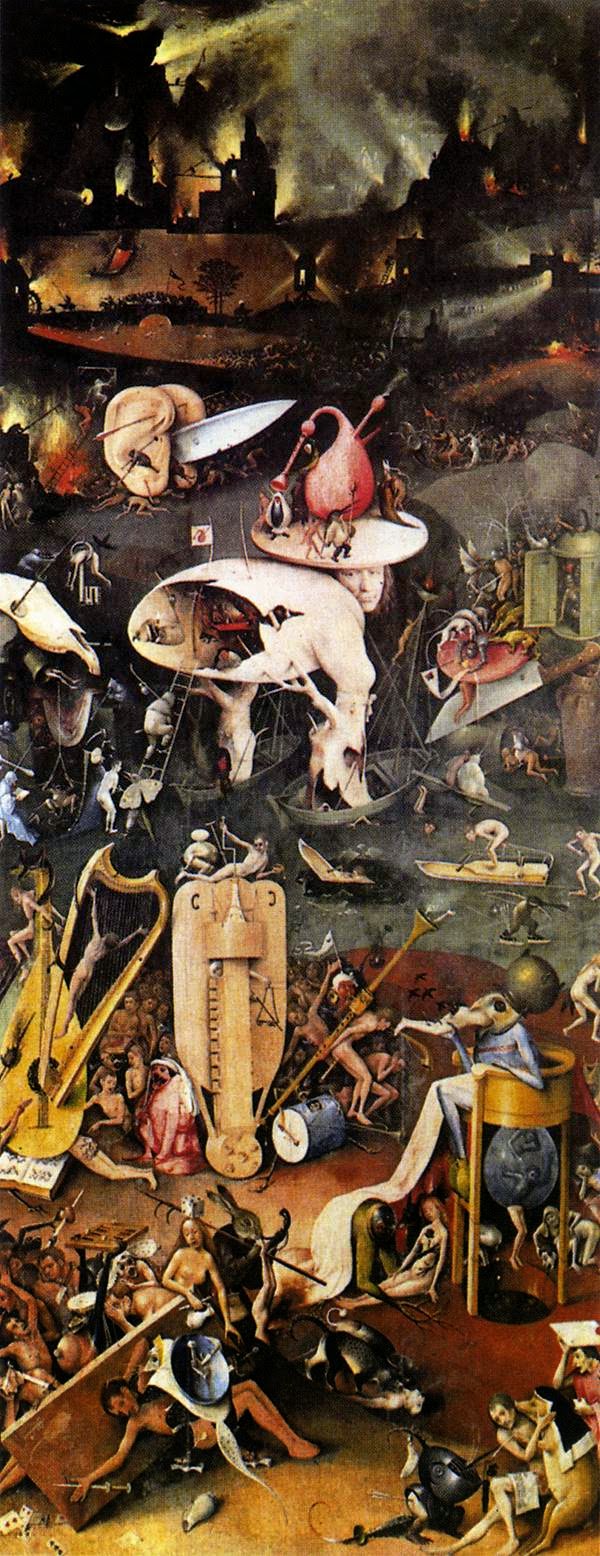
None of this could have been foreseen by Bosch: the haunting refrain of the 600 year old butt song from Hell


None of this could have been foreseen by Bosch: the haunting refrain of the 600 year old butt song from Hell


Is it difficult to conceive that the group of damned souls in the right wing of Bosch’s Triptych which represents the Musicians' Level would sing a hymn from the musical score fixed to the reverse of the reclining figure in front of the ensemble, led by an infernal monster?  It could more likely be a parody.


Hieronymus-Bosch.Portrait


Dutch master Hieronymus Bosch’s paintings are packed full of vivid imagery and complex meanings.


By far the best known and most ambitious work, The Garden of Earthly Delights illustrates Bosch’s individual artistic style, containing the most vivid imagery and complexity of symbolic meaning. 

Bosch painted his three part masterpiece between 1490 and 1510 when he was around 50 years old. 


The open triptych shows three scenes. The left panel is dedicated to Paradise, with the creation of Eve and the fountain of life, while the right panel shows hell. The central panel gives its name to the entire piece, representing a garden of life’s delights or pleasures. Between paradise and hell, these delights are nothing more than allusions to sin, showing humankind dedicated to diverse worldly pleasures. There are clear and strongly erotic representations of lust, along with others, whose meanings are more enigmatic. The fleeting beauty of flowers and the sweetness of fruit transmit a message of fragility and the ephemeral character of happiness and enjoyment. This seems to be corroborated by certain groups, such as the couple enclosed in a crystal ball on the left, which probably alludes to the popular Flemish saying: “happiness is like glass, it soon breaks”.
BOSCH, Hieronymus Triptych of Garden of Earthly Delights


The triptych is generally thought to be a warning of the dangers of giving in to temptation, but has been subject to vast amounts of conjecture and scrutiny, and critics and historians are split in two directions. Whereas some believe that the middle panel, which depicts a fantastical world of nudes in sexual engagement, large fruits, and other suggestive elements, is simply an illustration of paradise lost, others believe that it is a moral warning, which will lead you to hell, as it is depicted in the third panel of the series. Although there are many contradictory explanations, it is generally thought to be a warning against lust, one of the seven deadly sins.
 
Triptych of Garden of Earthly Delights (right wing detail)

The picture shows a detail of the right wing which represents the Musicians' Level (after Fraenger).
Right Panel. Sheet music in question located in top left corner:
1480-1505. Museo del Prado, Madrid, Spain.
In the Hell the normal relationships of the world are turned upside down. This is dramatically conveyed in the innocuous everyday objects which have swollen to monstrous proportions and serve as instruments of torture. One nude figure is attached by devils to the neck of a lute; another is helplessly entangled in the strings of a harp.


Tuesday, May 6, 2014

Sumi Jo, Beautiful Challenge: 20th Anniversary


Sumi Jo, Beautiful Challenge: 20th Anniversary

A coloratura soprano who in the late 1990s became one of the most noticed new names on the international operatic circuit, Sumi Jo was a discovery of the flamboyant German conductor Herbert von Karajan. A striking beauty, she owed her initial celebrity in part to video: the conductor arranged for her a prominent role in his Karajan in Salzburg video production.

Sumi Jo was born in Seoul, South Korea, in 1962. After studying both voice and piano from a young age, she dropped out of Seoul National University in 1983 to travel to Italy for study at the Accademia di Santa Cecilia in Rome. Among her teachers were Carlo Bergonzi and Grannila Bonelli. She graduated in 1985, with a concentration in keyboard as well as voice and over the next few years took top voice competition prizes in several countries, attracting the attention of Karajan. 

Her operatic debut came as Gilda in Verdi's Rigoletto in 1986, and two years later she performed in Un Ballo in Maschera under Karajan's baton. In the 1990s and early 2000s she was ubiquitous, singing in major capitals on nearly every continent. She won a Grammy award in 1993, and among her many recordings, her several portrayals of Mozart's vocally treacherous Queen of the Night in Die Zauberflöte have been especially noteworthy. In 2000, she began to see the fruits of Richard Bonynge's mentorship, refining her bel canto technique and preparing for a Carnegie Hall recital in February 2001.

Yuhki Kuramoto is a Japanese pianist and composer who writes primarily for the piano, though orchestral arrangements for some of his pieces exist. Born in Urawa-ku, Saitama, Kuramoto studied the piano from an early age. At school, he studied Rachmaninoff and performed as a part-time soloist in orchestras. He later went on to study at the Tokyo Institute of Technology and obtained a master’s degree in Applied Physics. Kuramoto chose to become a musician.

Kuramoto concentrated on the performance of the piano, the composition and arrangement of classical music and popular music. As a professional musician, his interests span genres from classical to folk songs and popular music. Kuramoto never attended a music conservatory and attained his knowledge mostly through self-study. At the age of 35, Kuramoto had the first of his CD published. To this day, he has published 18 CDs. Kuramoto's style of music shows influence from a variety of composers from different periods, most notably, by Rachmaninoff, Chopin and Ravel.

Concert for celebrating Sumi Jo’s 20th world Operatic Debut


Sumi Jo – Beautiful Challenge


Performer Sumi Jo (Soprano)

Yuhki Kuramoto (Pianist)
Jung Hak Seo (Baritone)
Taekyung Im (Crossover Tenor)
Guitar Quartet Libra
Mostly Philharmonic Orchestra and Chorus
Jung Ho Pak (Conductor)

Studio: Universal Music
Genre: Classical Music

DVD 1 : GALA CONCERT

01. Johann Strauss II: Die Fledermaus - Ouverture
02. Jacque Offenbach: Valse Tyrolienne from 'Le mari a la porte'
03. Georg Friedrich Handel: Lascia Ch'io Pianga from 'Rinaldo'
04. Franz Lehar: I Love You So from 'Merry Widow'
05. Stanly Myers: He was beautiful (Cavatina from 'Dear Hunter')
06. Sebastian Yradier: La Paloma
07. Frank Wildhorn: Once upon a Dream from 'Jekyll and Hyde'
08. William Balfe: I Dreamt I Dwelt In Marble Halls from 'The Bohemian Girl'
09. Alan Menken: Beauty and the Beast - Duet
10. Ennio Morricone: Nella Fantasia (Gabriel's Oboe from 'Mission')
11. Yuhki Kuramoto : Memory of Love
12. Yuhki Kuramoto : Virgin Road
13. Korean Traditional : Bird Song
14. Doo Nam Cho : Sun Gu Jah
15. Johann Strauss II: Blue Danube
16. Andrew L. Webber: Musical Medley
17. Giacomo Puccini: O Mio Babbino Caro from 'Gianni Schicchi'
2006. Sep. 3
Seoul Art Center Concert Hall

DVD 2 : Recital with pianist Vincenzo Scalera

01. George Hrederic Handel : Da Tempeste from oera
02. Antonio Vivaldi : 'Sposa son disprezzata' from opera
03. Antonio Vivaldi: Agitata Da Due Venti from 'Griselda'
04. Eva Dell'Acqua : Villanelle; J'ai vu passer l'hirondelle
05. Charles Gounod : Serenade: Quand tu chantes
06. Adolphe Adam : Ah vous dorais-je mama from opera
07. Jung Jun Ahn : Ari Ari Rang
08. Johann Strauss II: Wo die Zitronen bluhn Op.364
09. Vincenzo Bellini : 'Eccomi Oh ! quante volte' from
10. Giusseppe Verdi : Recitativo and aria 'E strano Ah Forse lui Sempre libera' from opera
11. Jacque Offenbach : Les oiseaux dans la charmille
12. Il Nam Jang : I'm still waiting You
2006. Sep.27
Seoul Art Center Concert Hall

Watch LIVE video Featuring Track 11 MBC epic drama "Ju-mong" O.S.T. (2006)
Yuhki Kuramoto : Memory of Love ---->