If There Is Much In The Window There Should Be More In The Room

Tuesday, January 12, 2010

PHILIP GLASS AKHNATEN DANCE ACT II SCENE III


Akhenaten known before the fifth year of his reign as Amenhotep IV, was a Pharaoh of the Eighteenth dynasty of Egypt who ruled for 17 years and died perhaps in 1336 BC or 1334 BC. He is especially noted for abandoning traditional Egyptian polytheism and introducing worship centered on the Aten, which is sometimes described as monotheistic or henotheistic. 

An early inscription likens the Aten to the sun as compared to stars, and later official language avoids calling the Aten a god, giving the solar deity a status above mere gods.

Akhenaten tried to bring about a departure from traditional religion, yet in the end it would not be accepted. After his death, traditional religious practice was gradually restored, and when some dozen years later rulers without clear rights of succession from the Eighteenth Dynasty founded a new dynasty, they discredited Akhenaten and his immediate successors, referring to Akhenaten himself as "the enemy" in archival records.


An opera in three acts. Possessing a theatrical almost romantic quality,
Philip Glass takes the ancient myth setting it into the contemporary music
landscape with consummate ease while retaining the
primordial substance of the original story.

Akhnaten, the third of Philip Glass's "portrait" operas
(composed in 1983), is based on the life of the Egyptian pharaoh Akhnaten, who ruled Egypt from 1375 BC to 1358 BC. Like Einstein on the Beach and Satyagraha, it is not a "story" opera but an episodic-symbolic portrait of a historical personality whose visionary ideas dramatically changed the perceptions of the world around him. Here, Glass, in his own libretto, tells the story of the man who supposedly introduced monotheism into classic Egyptian culture (and thereby the Western world), thus complimenting the realms of science and politics as portrayed in his previous two operas.  

After Einstein and Mahatma Gandhi, now an exponent of religion is the protagonist of the opera, the Egyptian pharaoh Akhnaten. Akhnaten revolutionized the leading religion in ancient Egypt by introducing the monotheism, that means, for him "Aton" was the only god. But after all he failed because of the striving for power and force of the traditional priests, and he was overthrown.

The score of the opera is a bit strange, because it is a mostly classical orchestra but without the violins. One reason for this kind of orchestration was the fact that the premiere took place in the state-theatre Stuttgart (Germany), where the main house (the "Großes Haus") was closed this year because of some renovation, and in the little house there was not enough place for a full orchestra.

But the lack of the violins fits very good to Glass' intention with this work: the music has a warmer, deeper and darker sound, and the contrast to the winds is more intensively. Also the percussion-instruments get more place, especially in scene 2 of the first act, the funeral of Akhnaten's father. There is a kind of music, which never appears in "Einstein on the Beach" nor in "Satyagraha". 

In fact, this "Funeral" was the first piece of "Akhnaten" that was played in public, because there is a special version for the Philip Glass Ensemble. This piece was recorded for the CD "Dancepieces", which might be one of the best Ensemble-CDs.

In most parts of the opera there dominates a restful and nearly calm sound; most of it stands in a-minor. The strength and power of Akhnaten himself is represented with the trumpet, which is used as "his" instrument. But there is another really emotional scene with the full orchestra: Akhnaten's fall.


Act II portrays the changes Akhnaten wrought: he leads a revolt that deposes the powerful priests of Amon, the old older; he abandons the polygamy of prior pharaohs for the love of his beautiful wife, Nefertiti; and he creates Akhetaten, "City of the Horizon of Aten", a temple of art and beauty in honor of his new god.

Like the legendary King Arthur, here he seeks to create his Camelot, inspired by the beneficence of his god Aten. The act ends with Akhnaten's hymn to the god, praising its beauty and recognizing it as the force of creation which only he, as the son of Aten, can recognize.


SCENE 3: THE CITY - DANCE

The Scribe speaks the first part of this scene alone, without musical accompaniment. His speech is taken from the boundary markers (or stelæ) of Akhnaten's new city, Akhetaten (The Horizon of the Aten).

During his speech, Akhetaten - a new city of light and open spaces that represents architecturally and visually the spirit of the epoch of Akhnaten - appears behind him.

Text: Recited by the Scribe (from the boundary markers found in the valley at Tel-el-Amarna, in Breasted, A History of Egypt)

Stela 1

And his majesty said unto them, "Ye behold the City of the Horizon of the Aten, which the Aten has desired me to make for him as a monument in the great name of my majesty forever. For it was the Aten, my Father, that brought me to this City of the Horizon.

There was not a noble who directed me to it; there was not any man in the whole land who led me to it, saying, 'It is fitting for his majesty that he makes a City of the Horizon of Aten in this place.' Nay, but it was the Aten, my Father that directed me to make it for him.

Behold the Pharaoh found that this site belonged not to a god, nor to a goddess, it belonged not to a prince or to a princess. There was no right for any man to act as owner of it.

Stela 2

"I will make the City of the Horizon of the Aten for the Aten, my Father, in this place. I will not make the city south of it, north of it, west of it or east of it. I will not pass beyond the southern boundary stone southward, neither will I pass beyond the northern boundary stone northward to make for him a City of the Horizon there; neither will I make for him a city on the western side.

Nay, but I will make the City of the Horizon for the Aten, my Father, upon the east side, the place for which he did enclose for his own self with cliffs, and made a plain in the midst of it that I might sacrifice to him thereon: this is it.

"Neither shall the Queen say unto me, `Behold there is a goodly place for the City of the Horizon in another place', and I harken unto her. Neither shall any noble nor any man in the whole land say unto me, `Behold there is a goodly place for the City of the Horizon in another place', and I harken unto them. Whether it be downstream or southward or westward or eastward, I will not say, `I will abandon this City of the Horizon.',"

The dance, which immediately follows the brass fanfare, contrasts with the heavy traditional ritual of the temple scene which opened this act.

Musicians (triangle, wood block, and tambourine) appear on stage with dancers, as well as Akhnaten and principal members of his entourage, in a dance that marks the celebration and inauguration of the city of Akhetaten.


Cleopatra: Portrait of a Killer


Rating:
★★★★★
Category:Movies
Genre: Documentary
Technology Rebuilds the Cleopatra Myth


PhotobucketCleopatra: Portrait of a Killer. 


The very title of the latest BBC documentary draws instant connotations.
It’s not everyday that the most famous woman in history and a 19th century cut-throat villain would merge in the consciousness. But that illustration floods into one’s head as the chosen BBC subtitle reminds of Patricia Cornwell’s famous 2002 Casebook on Jack the Ripper.

The documentarian Neil Oliver would have us believe that Cleopatra the Seventh was capable of showing the very same malice and cold calculations as the unidentified killer.

Photobucket

To those of us wondering about the two thousand years of speculation over love, beauty, betrayal, darkness, and truth, and whether Cleopatra was a skilled politician or ruthless slayer, the title may come as a disappointing giveaway. Thankfully this docudrama has a lot more to say.

A Discovery in Turkey


The discovery of a tomb in Ephesus, a once glorious Roman capital ten times the size of Pompeii but now in Turkey, is a jump-off point for some refreshing anthropological and archaeological conclusions. These summations relate to the history of Cleopatra’s younger sister Arsinoe (Karima Gouit).

In the early 1920s human remains were found in a sarcophagus filled with water by archaeologists who took only the skull back to Germany. It subsequently became lost in the chaos of WWII but, somewhat frugally, notes and photographs of its dimensions survived.

Lucky, because the very fact that it was customary to bury the dead outside the city walls of Ephesus (only four men of great standing had been laid to rest within) means the discovery of these remains belonging to a young woman in a remarkable tomb there leads to a variety of questions. Each piece of this delicate find becomes essential if a picture can emerge of a period in which the worlds of the Pharaohs and the Romans violently collided.

The most startling revelation this documentary offers is that the legendary Cleopatra herself (Camelia Ben Sakour) may have been part-African and not from Greek Caucasian descent as previously thought.

PhotobucketLeading the team in discovering the body’s true identity, Dr Hilke Thür
from the Austrian Academy of Science claims: “The results of the forensic examination and the fact that the facial reconstruction shows that Arsinoe had an African mother is a real sensation which leads to a new insight on Cleopatra’s family and the relationship of the sisters Cleopatra and Arsinoe.”

Unfortunately, this re-enactment only pays lip-service to the possibility of half-siblings and the undertones of racial tensions rising to the surface as one possible reason for the powerful family’s fragmentation.

Whether William Shakespeare’s tragedy Antony & Cleopatra adorns the boards or Joseph L. Mankiewicz’s lens captures a young queen’s struggle to resist the dark forces of imperialism in Cleopatra (1963), an eagerness to embellish overcomes hard fact.

That’s partly due to the mystique of Cleopatra VII as an ancient figure, and even in the works mentioned above she holds an air of foreign wonder and veiled secrecy. This is an inscrutability that Cleopatra: Portrait of a Killer seeks to erase, replacing it with a dark heart filled with conspiring and calculating murder.


Sibling Rivalry


This recount focuses on a torrid relationship between the two sisters. After the death of Cleopatra’s father in 51BCE, she and her younger brother Ptolemy XIII (Habib Yassine Adjou) became united in rule and were to be married. After a dispute over the increasing influence of the emergent superpower in Rome and consequent civil war between the pair, Cleopatra allied herself against her brothers and sister and subsequently into the arms of the much older Julius Caesar (Daniel Pellean) in 48BCE.

Revenge is never far from myths surrounding the Ancient, and here Neil Oliver attempts to make that emotion stick by suggesting that Cleopatra killed all three of her siblings for fear of a challenge to her desired omnipotence.

Oliver calls his first witness to the stand in the form of Roman historian Cassius Dio, played by the purple-robed and stereotypically robust actor Ian McNeice. Whilst mesmerizingly holding court with future scholars as he details actual writings and scripture – albeit scribed some 300 years after the event – even he pales in comparison to the sort of computer generated imagery on display.

Whilst it may not have the seminal and startling effect of another BBC series like Walking with Dinosaurs, the use of computer graphics greatly aids and augments the story as it unfolds.

Cinematic elements complement Oliver’s narration as the camera pulls back to reveal the full-circular extent of the remains at Ephesus. Jump cuts show the sacred and vast steps of The Temple of Artemis, focusing finally on a frame of Arsinoe’s listless and bloodied features.

Convincing sets with stone pillars, orange flames and silk drapes blow against blue sky backgrounds and red/gold carpets of sand. It’s refreshing to see a documentary’s visual elements unpolluted with place names and other irreverent text graphics breaking up the camera’s intentions.

Whether it’s the sort of CGI showing Artemis in the background as Oliver sails across to a final destination and supposed sanctuary for Arsinoe after her banishment from Egypt, or the computer technology which helps uncover the evidence, it's impossible to imagine the painstaking processes of old in recounting historic events via prop & monograph.

It’s through another graphical recreation that Arsinoe’s final resting place is revealed. As memories of her famous victory over Caesar at the Great Pharos Lighthouse swim at the back of our minds, 107 pieces of the skeleton’s tomb are mapped out ready for assembly via a grand puzzle game.

If anymore evidence was needed that this painstaking exercise was worth it, it comes in the form of a torch found within in the tomb itself: a stone creation shaped like a Papyrus plant, indigenous to Egypt.

Even before reconstruction is complete the outcome simply screams celebration of Arsinoe’s victory at the lighthouse with a tomb that fittingly mimics that seventh wonder of the world. With her final resting place confirmed, what is lacking is any inclination of Cleopatra’s motivations to kill her own sister beyond that of fear. With the knives out for Caesar she turns to Mark Antony and with his help commits what is noted in the documentary as “the biggest crime of the period” in extinguishing the flame of her young sibling on the steps of the autonomous sanctuary of Artemis in 41BCE.

Technology’s final contribution to Oliver’s journey over sea, desert, ruins and tombs, culminates in the unlikely surroundings of the University of Dundee, where state-of-the-art technology caps this epic passage by creating a 3D model of Arsinoe’s missing cranium.

Years of hard work and forensic toil for medical expert Dr Fabian Kanz and Dr Hilke Thür are washed away in seconds the moment they are able to hold the replica skull. Almost certainly for our benefit alone, a 2D example then has skin, hair and facial features added as if to capture the emotions of the audience. An unnecessary act; if engagement with the subject has not already been achieved by this point it never will.

What is brought to life is not the forgotten princess alone, but the idea of an alternative history whereby the young Arsinoe, and not Cleopatra, is the most famous woman in the world.


RELATED VIDEOS:

http://www.youtube.com/watch?v=xAAtJzXvX1c

http://www.youtube.com/watch?v=tZTPa-A4l1E

http://www.youtube.com/watch?v=1Di_fblZz0s

http://www.youtube.com/watch?v=EwwRQlrBMuE

http://www.youtube.com/watch?v=-JnVdGUZOEA

http://www.youtube.com/watch?v=2xzic_CV4Jc


Acknowledgments:
Andrew McWhirter
Images courtesy of Lion Television.


Monday, January 11, 2010

More Brendel: Schubert Op. 90/3


The Schubert piano impromptus are among the most beautiful music ever and Brendel's recordings of them are stellar. 


An internationally known, acclaimed, and respected classical pianist, Alfred Brendel was born on January 5, 1931, in Wiesemberg, Moravia (now the Czech Republic), spending his childhood in Yugoslavia and Austria. 

Far from a child prodigy, he started piano lessons at the age of six, and although he studied at Graz Conservatory, his formal training was effectively over by the time he was 16 years old. A year later he gave his first public piano recital. Brendel's first recording was released in 1972, and he has since recorded all of Beethoven's piano works (in a series for Vox Records) as well as piano pieces by Haydn, Mozart, Schubert, Schumann, Liszt, Brahms, and others in a long career that has generated an extensive discography, most of it for Philips Recordings. - Wikipedia


Schubert expressed his musical ideas in the same way one confides things to a friend-- Simply, without formality or extravagance but honestly and straight to the heart.


Sunday, January 10, 2010

A Cleft in the Earth Under One Sky


The Maguindanao massacre, also known as the Ampatuan massacre (after the town where the mass graves were found), occurred on the morning of November 23, 2009, in the town of Ampatuan in Maguindanao province, on the island of Mindanao in the Philippines. 

The victims were about to file a certificate of candidacy for Esmael Mangudadatu, vice mayor of Buluan town. Mangudadatu was challenging part of the  national elections in 2010. Datu Unsay mayor Andal Ampatuan, Jr, son of the incumbent Maguindanao governor Andal Ampatuan, Sr, in the forthcoming Maguindanao gubernatorial election.  

The 57 people killed included Mangudadatu's wife, his two sisters, journalists, lawyers, aides, and motorists who were witnesses or were mistakenly identified as part of the convoy - Wikipedia

The killings on the road leading to Shariff Aguak town have been condemned loudly and vehemently. Not only because of the cruelty and vileness involved, but also because they were carried out with apparent planning and cold-blooded cunning.- Philippine Daily Inquirer


Directed and edited by Kiri Dalena. Written and produced by Patricia Evangelista. Voiced by Cheche Lazaro. Aired over ANC.November 23, 2009. This is a story about death in a place they call the Promised Land, where a crescent moon rises with a Christian sun, over a road where 57 men and women were murdered in cold blood.


Under One Sky (Part 1 of 3)


Under One Sky (Part 2 of 3)


Under One Sky (Part 3 of 3)


Sources: http://en.wikipedia.org/wiki/Maguindanao_massacreUnder One Sky: Patricia Evangelista Kiri DalenaCheche LazaroLaurence Bernabe Rina Jimenez David


Tuesday, January 5, 2010

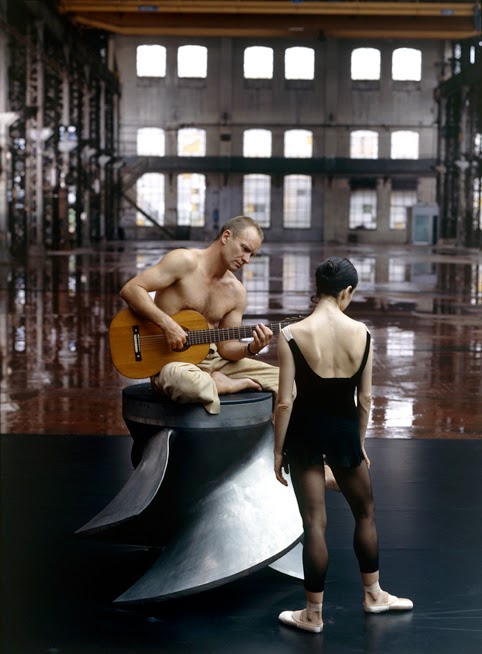
Alessandra Ferri and STING


When one envisions a ballerina, a lovely, ethereal creature comes to mind; one who skims across the floor with delicacy and grace......whose every movement is soft, feminine and fluid.

This image could almost seem like a fantasy, impossible to exist in the real world. As a matter of fact, it rarely does. While good ballet dancers are not numerous, great ones come our way so infrequently that they usually become legends.
This is certainly Alessandra Ferri's destiny.

For people not familiar with her dancing, they might wonder what distinguishes one principal dancer from another. Why is she so special? The answer is rather difficult to put into words since her magnificent qualities defy description.

Just to see her move, to extend her incredibly arched foot, to observe the musicality that ripples through her entire body as she makes an otherwise academic step look like poetry-------all of this lyricism, exquisite line and passionate expression is so evident that the observer cannot help but be taken in by the beauty of it all. She surely exemplifies what ballet is supposed to be.

Alessandra Ferri is a highly accomplished Italian ballerina and performs a beautiful ballet routine as Sting plays Bach’s Perlude on his guitar. The warm up scenes are very intimate too as he does yoga stretches and she gets her shoes ready—it’s soothing and has a nice ending as well.


Music video with Alessandra Ferri (principal dancer with American Ballet Theater) and Sting.
Work: Bach: Suite for Cello solo no 1 in G major, BWV 1007
Composer: Johann Sebastian Bach