Tweet
Image 1-- Sunset casts a rosy glow
over granite peaks encircling a glacial lake in Torres del Paine National Park,
Chile. Chile's prized jewel, the 598,000-acre (242,000-hectare) national park
is a mosaic of landforms including soaring mountains, golden pampas, and
grinding ice fields.
Image 2-- Moreno Glacier rises above
Lake Argentino as a rugged wall three miles (4.8 kilometers) wide and almost
200 feet (60 meters) tall. One of 47 massive ice fields in Argentine Patagonia's
Glaciers National Park, this grinding, groaning force of nature covers a
hundred square miles (260 square kilometers).
Image 3-- Hundred-foot-tall
(30-meter-tall) araucaria trees surrounding a waterfall reach for the stars in
Chile's Copahue Provincial Park. Living relics of the Jurassic period, these
thousand-year-old giants stand as symbols of Patagonian tenacity in a landscape
both severe and sublime.
Image 4-- A single ranch can stretch
for several hundred thousand acres in Río Negro, a province in northern
Argentine Patagonia. Ranch workers oversee far-flung grazing from outposts
called puestos, like the one above, where hours are long and comforts are few.
Image 5-- Settlements, like this
twinkling village built between the mountains and the sea, are few and far
between in Patagonia. The 260,000-square-mile (673,000-square-kilometer) region
is so sparsely settled that population density is as low as one person per
square mile in some areas.
Image 6-- A lone lighthouse stands
guard on the Patagonia coast. Cold waters rushing in from Antarctica support a
wide variety of life along Patagonia's southern coast, including sea lions,
cormorants, and albatrosses.
Image 7-- The 69,930-acre
(28,300-hectare) Copahue Provincial Park, on the eastern border of Chile, is
home to prehistoric araucaria forests, vast prairies, snowy Andean peaks,
picturesque lakes, and lunar-like landscapes of rock formations, shown here.
The park sits in the massive collapsed caldera of Copahue volcano.
Image 8-- The snowy peaks of the
Andes spawn thousands of gushing streams and waterfalls in Patagonia. From
majestic mountains to trembling volcanoes, Patagonia remains the unspoiled
frontier of South America.
Photographs By: Peter Essick
*original post Jan 15, 2009
Noscere Audere Velle Tascere Ire: rifts on Arts, music, photography, history, literature, poetry, science, the paintings, visual arts, the dance and ultimately to the living spaces of nature by Nosauvelta. This is a look for the space between thinking, knowing, seeing, understanding and listening well, reading stories and thoughts of what was, what is, and what has to be as told by the wise through blogs, photos, video, and music blogs.
If There Is Much In The Window There Should Be More In The Room
Wednesday, June 15, 2011
Saturday, May 7, 2011
The Biomotion Lab
Tweet
http://www.biomotionlab.ca/Demos/BMLwalker.html
Biological motion contains information about several different emotions, intentions, personality traits and biological attributes of the agent.
The human visual system is highly sensitive to biological motion and capable of extracting this information from it. We investigate the question of how such information is encoded in biological motion patterns and how it can be retrieved from it.
We developed a framework that transforms biological motion into a linearized representation which enables us to apply linear methods from statistics and pattern recognition to its analysis.
Initially, we used gender classification as an example and created a simple classifier, whose performance was compared to psychophysical data from human observers. However, the same approach can be used to extract information about other walker attributes as well.....
http://www.biomotionlab.ca/?page_id=46
http://www.biomotionlab.ca/Demos/BMLwalker.html
Biological motion contains information about several different emotions, intentions, personality traits and biological attributes of the agent.
The human visual system is highly sensitive to biological motion and capable of extracting this information from it. We investigate the question of how such information is encoded in biological motion patterns and how it can be retrieved from it.
We developed a framework that transforms biological motion into a linearized representation which enables us to apply linear methods from statistics and pattern recognition to its analysis.
Initially, we used gender classification as an example and created a simple classifier, whose performance was compared to psychophysical data from human observers. However, the same approach can be used to extract information about other walker attributes as well.....
http://www.biomotionlab.ca/?page_id=46
Friday, May 6, 2011
CLOCK
Tweet
This Is fun. Billy Chasen put together a live clock
using images of people doing acrobatics in order to form numbers. He found the
images on another blog and then put together the strange clock which even
includes seconds. So the next time you ask what time is it? It’s a quarter
back-split to 9.
Thursday, May 5, 2011
Merging Oceans
Tweet
http://en.wikipedia.org/wiki/Halocline
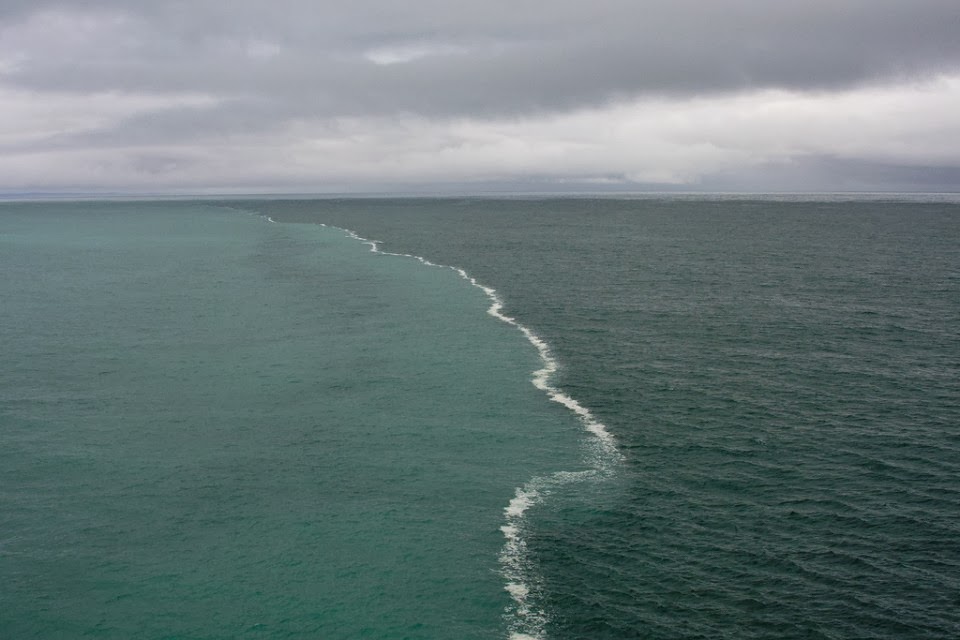
What you are seeing is a result of the melting glaciers being composed of fresh water and the ocean has a higher percentage of salt causing the two bodies of water to have different densities and therefore makes it more difficult to mix. They will eventually mix given enough time....
An example of a Halocline described on Wikipedia.
http://en.wikipedia.org/wiki/Halocline
What you are seeing is a result of the melting glaciers being composed of fresh water and the ocean has a higher percentage of salt causing the two bodies of water to have different densities and therefore makes it more difficult to mix. They will eventually mix given enough time....
Wednesday, May 4, 2011
WDCS - Life size blue whale - the largest animal in the world
Tweet
http://www.wdcs.co.uk/media/flash/whalebanner/content_pub_en.html
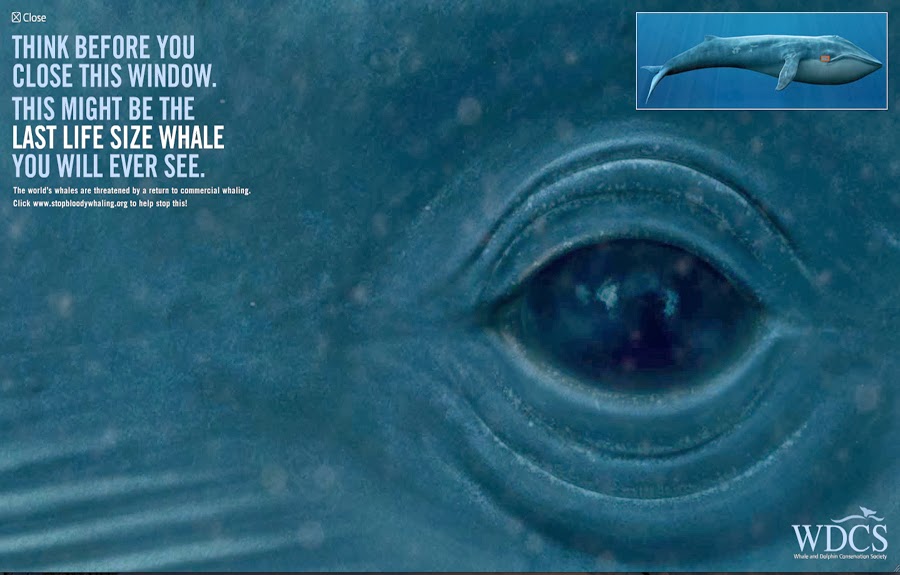
The life size Blue Whale close-up experience was created as part of WDCS's anti-whaling campaign. The endangered blue whale is the largest animal ever to have lived on the planet....
http://www.wdcs.co.uk/media/flash/whalebanner/content_pub_en.html
The life size Blue Whale close-up experience was created as part of WDCS's anti-whaling campaign. The endangered blue whale is the largest animal ever to have lived on the planet....
Subscribe to:
Posts (Atom)