If There Is Much In The Window There Should Be More In The Room

Showing posts with label history. Show all posts

Friday, January 11, 2013

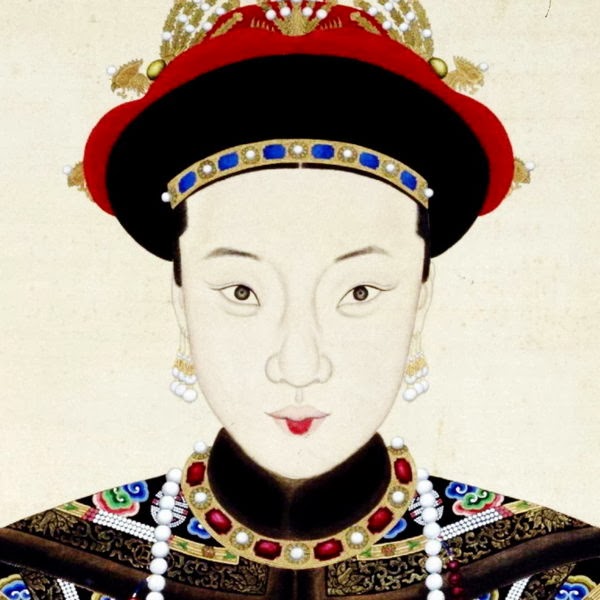
The Concubine


Cixi: The Woman Behind The Throne
The concubine who became China's last empress

History can be a slippery substance, particularly when it comes to personalities. A century after the death of China's last and most famous empress, Cixi, the story of her life and reign remains veiled by varying versions of the truth.

Some sources paint her as a veritable wicked witch of the east, whose enemies often mysteriously dropped dead. Others link her to tales of sexual intrigue within the palace walls, even questioning whether her favorite eunuch was truly a eunuch. But recent scholarly analyses discredit many of those sensational stories and suggest a more complicated woman than this caricature.


What do we really know about this woman who indirectly controlled China's throne for almost half a century, in the twilight of the Qing dynasty? She entered history on November 29, 1835 as a rather ordinary Chinese girl named Yehenara, although there was a certain prestige in being born to a family from the ruling Manchu minority. At age 16, she was brought to the Forbidden City to join Emperor Xianfeng's harem—which may sound like punishment to modern ears, but was considered a swank role for Chinese women of her time.


Daniele Vare's book, The Last Empress,  
says Yehenara (he calls her Yehonala) rose to the top of the concubine ranks when the emperor overheard her singing and asked to see her. Infatuated, he began picking her name from the nightly roster of choices to visit his bedchamber, and soon she bore him a son. This earned her the title Tzu Hsi, meaning "empress of the western palace," spelled Cixi these days.

When Xianfeng died in 1861, Cixi's five-year-old son was his only male heir and became the emperor Tongzhi, making her the "empress dowager" and a regent ruler. 


Cixi relinquished the regency when her son turned 17, but Tongzhi died two years later and Cixi became a regent again, this time for her three-year-old nephew Guangxu. 

Some historians have pointed to this turn of events as proof of Cixi's political shrewdness because it defied tradition for the new emperor to be of the same generation as his predecessor. 

Also, although Tongzhi had no heir when he died, his first-ranking concubine, Alute, was pregnant. So it seems far too convenient that Alute and her unborn child died during the debate over succession. The court announced it as a suicide, but as the New York Times reported at the time, the circumstances "aroused general suspicion." 

Even if Alute was murdered, Cixi wasn't necessarily responsible, as author Sterling Seagrave points out. The late emperor had five brothers, princes of the imperial court, who had their own rivalries and ambitions for controlling the throne indirectly.
 

By Amanda Bensen
Smithsonian.com, March 01, 2008 


Tz'u-hsi (1835-1908), concubine to the Hsien-feng emperor and later empress dowager, was the power behind the throne in China from 1860 to 1908.

Tz'u-hsi, who is also known as Yehonala, Empress Hsiao-ch'in, or "The Old Buddha, " was born on Nov. 29, 1835. 

At the age of 16 she became a low-ranking concubine to the Hsienfeng emperor (reigned 1851-1861), but in 1856, when she gave birth to the Emperor's only son and heir, she was made a second-class concubine. 

When the Emperor died on Aug. 22, 1861, in Jehol, where he had fled before the allied British and French advance on Peking in 1860, Tz'u-hsi's son became the T'ung-chih emperor (1862-1875). 


During his minority the new emperor, according to his father's will, would rule through a regency, but all decrees had to be approved by the two empress dowagers - his mother and the senior consort Empress Tz'u-an.


Thursday, November 15, 2012

In Celebration of Dogs


In Celebration of DOGS  Dogs are our link to paradise. They don't know evil or jealousy or discontent. To sit with a dog on a hillside on a glorious afternoon is to be back in Eden, where doing nothing was not boring--it was peace. - Milan Kundera

In human affairs, despite power, fame and fortune, there exists a true unflinching love that cannot lie, a perfect passion worship fed, fidelity and companionship always available in the form of a dog. When you have a dog, you open yourself to profound joy and, prospectively, to equally profound sadness.
The hardest thing to bear when they go from us, these quiet friends, is that they carry away with them so many years of our own lives.


Rudyard Kipling said:
“….When the body that lived at your single will,
With its whimper of welcome, is stilled (how still!)
When the spirit that answered your every mood
Is gone--wherever it goes--for good,
You will discover how much you care,
And will give your heart to a dog to tear…”
Lord Byron puts it more eloquently than I ever could:
Near this Spot
are deposited the Remains of one
who possessed Beauty without Vanity,
Strength without Insolence,
Courage without Ferosity,
and all the virtues of Man without his Vices.

This praise, which would be unmeaning Flattery
if inscribed over human Ashes,
is but a just tribute to the Memory of
BOATSWAIN, a DOG,
who was born in Newfoundland May 1803
and died at Newstead Nov. 18, 1808.

When some proud Son of Man returns to Earth,
Unknown by Glory, but upheld by Birth,
The sculptor’s art exhausts the pomp of woe,
And storied urns record who rests below.
When all is done, upon the Tomb is seen,
Not what he was, but what he should have been.
But the poor Dog, in life the firmest friend,
The first to welcome, foremost to defend,
Whose honest heart is still his Master’s own,
Who labours, fights, lives, breathes for him alone,
Unhonoured falls, unnoticed all his worth,
Denied in heaven the Soul he held on earth –
While man, vain insect! hopes to be forgiven,
And claims himself a sole exclusive heaven.

Oh man! thou feeble tenant of an hour,
Debased by slavery, or corrupt by power –
Who knows thee well must quit thee with disgust,
Degraded mass of animated dust!
Thy love is lust, thy friendship all a cheat,
Thy tongue hypocrisy, thy heart deceit!
By nature vile, ennobled but by name,
Each kindred brute might bid thee blush for shame.
Ye, who perchance behold this simple urn,
Pass on – it honors none you wish to mourn.
To mark a friend’s remains these stones arise;
I never knew but one – and here he lies.


This most profound perspective from Kahlil Gibran:
Your joy is your sorrow unmasked.
And the selfsame well from which your laughter rises was oftentimes filled with your tears.
And how else can it be?
The deeper that sorrow carves into your being, the more joy you can contain.
Is not the cup that holds your wine the very cup that was burned in the potter's oven?
And is not the lute that soothes your spirit, the very wood that was hollowed with knives?
When you are joyous, look deep into your heart and you shall find it is only that which has given you sorrow that is giving you joy.
When you are sorrowful look again in your heart, and you shall see that in truth you are weeping for that which has been your delight…”


With the advent of writing, people began to set dog stories down on page. And, as happens when stories are retold, lines blur between fact and fancy, history and legend.
As a tribute to that enigmatic connection in the way human beings and dogs try to coordinate their confusing lives around each other, we consider some of the most stirring examples of Dog + Man throughout history.


Argos + Odysseus 

 
“Argos Recognizes Odysseus,” Theodor van Thulden (1606 - 1669)
The first famous canine story dates from the 8th century B.C. In Homer’s “Odyssey,” the king of Ithaca returns home disguised as a beggar after 20 years. Two of King Odysseus’ old friends recognize him, his aged nurse and Argos, the only dog to whom Homer gave a name, and as such the first named dog in recorded history.
“As they talked, a dog that lay there lifted up his muzzle, pricked his ears … It was Argos, Odysseus’ long-enduring dog, he trained as a puppy… the moment he sensed Odysseus standing by he thumped his tail, muzzling low, and his ears dropped, though he had no strength to drag himself an inch toward his master.
Odysseus glanced to the side and flicked away a tear.” And with that, on his dung heap, Argos dies. While the story of the steadfast friend and the first recorded tear shed for an animal, may be mythic, the vignette of the faithful hound was a story that would be oft repeated.


Tuesday, October 11, 2011

Ancients Behaving Badly


Were these men as depraved or as noble as the stories suggest?

History has had its share of infamous events through lives of tyrants. Historical experts will look at these tyrants with a modern eye to show them as real people, doing psychiatric profiling to piece together what was going on in their heads and see how they measure up to other brutal rulers.

HISTORY™ cuts through the folklore to present precise portraits of some of the world’s most fascinating, iconic, and ruthless leader.

Using the latest historical discoveries, forensic science tests, archaeological finds, analysis of torture instruments, and battlefield dynamics, ANCIENTS BEHAVING BADLY sheds light on these leaders and how they really came to power (most killed off family members); treated their subjects, friends, and family; were so successful in keeping their power; demonstrated battlefield leadership; and achieved such spectacular transformations at home. Expert interviews, on-location shots, and CGI help to re-create their environments and provide stunning reenactments.

Ancients Behaving Badly is an eight part series for History Television that applies a modern analytical take to some of classical history’s most infamous rulers.


Evidence for the lives of these people comes from very limited and biased sources. Like all histories, they’re written by the victors, whether the dynasty that usurped the line of Nero and Caligula and therefore had a vested interest in making them look bad, or the history of the Mongols, a hagiography to Genghis Khan written by his successors designed to make him look great.
This series will answer these questions. Using physical testing, archaeology and a modern knowledge of the sciences from toxicology to ballistics we will re-appraise their lives to separate fact from fiction.
Historical experts will take us to the sites of some of the most pivotal or infamous events of their lives and we will piece together what really happened. Highly stylized two and a half D graphics will be used to bring the crucial and violent moments of their lives to life.
And psychiatric profiling will help us to piece together what was going on inside their heads and then see how they measure up to other brutal rulers on our unique Ancients Behaving Badly Psycho-graph.
By looking at these tyrants with a modern eye, the series aims to show them as real people, who behaved and thought and acted in ways that we can recognize. We will test the stories told about them in the crucible of the modern world. (More details at Amazon.com)
Episodes included: Caligula, Attila The Hun, Julius Caesar, Alexander the Great, Nero, Hannibal, Genghis Khan and Cleopatra


Watch the full documentary now (playlist – 5 hours)


Sources:
history.com 
topdocumentaryfilms


Friday, March 4, 2011

Maps of War – History in 90 seconds


This is an amazing Shockwave production showing in 90 seconds the ebb and flow of empires in the region of the Mediterranean basin and beyond.

Who has controlled the Middle East over the course of history? Pretty much everyone. Egyptians, Turks, Jews, Romans, Arabs, Persians, Europeans...the list goes on. Who will control the Middle East today? That is a much bigger question.

Activity/animation of a map of the Middle East showing the ebb and flow of different conquerors from -3000 to 1979. See 5,000 years of history in 90-seconds....


*mapsofwar.com*