If There Is Much In The Window There Should Be More In The Room

Showing posts with label documentary. Show all posts

Sunday, March 2, 2014

Chopin Documentary - The Women behind the Music


Chopin Documentary - The Women behind the Music 


March 1 is Frédéric Chopin's birthday - although some people celebrate it on February 22nd. 


As written by Jeremy Nicholas: Few composers command such universal love as Chopin; even fewer have such a high proportion of their entire output remaining in the active repertoire. He’s the only great composer whose every work involves the piano – no symphonies, operas or choral works and only a handful of compositions that involve other instruments. He wrote just under 200 works; 169 of these are for solo piano.

This documentary is about the life of the great pianist and composer Chopin and the story of the women whose voices inspired his music. It is undeniable that Chopin revolutionized the nature of music composed for the piano both technically and emotionally. What is less well known is that the actual musical instrument that provided his greatest source of inspiration was the female voice.

To mark the 200th anniversary of Chopin's birth, this film follows young pianist James Rhodes on a journey to Warsaw, Paris and London to discover the real women who had such a powerful influence on the composer.

Exploring the events of Chopin's life, Rhodes encounters the singers who enchanted the composer with their voices: Konstancja, a young soprano and the object of his teenage affections; Delfina, the sexually notorious Polish Parisian emigre countess; fellow composer and opera singer Pauline Viardot; and, during the final few months of his life, the Swedish operatic superstar Jenny Lind.

Threaded through the narrative of the film is a selection of Chopin's piano music performed by Rhodes, while rising young opera singer Natalya Romaniw performs some of the signature arias that thrilled Chopin.

Featuring contributions from Chopin experts including the interpreters Emanuel Ax and Garrick Ohlsson, his biographer Adam Zamoyski and piano guru Jeremy Siepmann.


Chopin’s extant compositions were written primarily for the piano as a solo instrument. Though they are technically demanding his style emphasizes nuance and expressive depth.

Chopin invented musical forms such as the ballade and was responsible for major innovations in forms such as the piano sonata, waltz, nocturne, étude, impromptu and prélude. His works are mainstays and masterpieces of Romanticism in 19th-century classical music.

Frédéric Chopin's four ballades are one-movement pieces for solo piano, composed between 1835 and 1842. They are some of the most challenging pieces in the standard piano repertoire...
(more on Sviatoslav Richter in Kiev, 1959/60 - Chopin, The Four Ballades & Etudes.....)


Tuesday, October 11, 2011

Ancients Behaving Badly


Were these men as depraved or as noble as the stories suggest?

History has had its share of infamous events through lives of tyrants. Historical experts will look at these tyrants with a modern eye to show them as real people, doing psychiatric profiling to piece together what was going on in their heads and see how they measure up to other brutal rulers.

HISTORY™ cuts through the folklore to present precise portraits of some of the world’s most fascinating, iconic, and ruthless leader.

Using the latest historical discoveries, forensic science tests, archaeological finds, analysis of torture instruments, and battlefield dynamics, ANCIENTS BEHAVING BADLY sheds light on these leaders and how they really came to power (most killed off family members); treated their subjects, friends, and family; were so successful in keeping their power; demonstrated battlefield leadership; and achieved such spectacular transformations at home. Expert interviews, on-location shots, and CGI help to re-create their environments and provide stunning reenactments.

Ancients Behaving Badly is an eight part series for History Television that applies a modern analytical take to some of classical history’s most infamous rulers.


Evidence for the lives of these people comes from very limited and biased sources. Like all histories, they’re written by the victors, whether the dynasty that usurped the line of Nero and Caligula and therefore had a vested interest in making them look bad, or the history of the Mongols, a hagiography to Genghis Khan written by his successors designed to make him look great.
This series will answer these questions. Using physical testing, archaeology and a modern knowledge of the sciences from toxicology to ballistics we will re-appraise their lives to separate fact from fiction.
Historical experts will take us to the sites of some of the most pivotal or infamous events of their lives and we will piece together what really happened. Highly stylized two and a half D graphics will be used to bring the crucial and violent moments of their lives to life.
And psychiatric profiling will help us to piece together what was going on inside their heads and then see how they measure up to other brutal rulers on our unique Ancients Behaving Badly Psycho-graph.
By looking at these tyrants with a modern eye, the series aims to show them as real people, who behaved and thought and acted in ways that we can recognize. We will test the stories told about them in the crucible of the modern world. (More details at Amazon.com)
Episodes included: Caligula, Attila The Hun, Julius Caesar, Alexander the Great, Nero, Hannibal, Genghis Khan and Cleopatra


Watch the full documentary now (playlist – 5 hours)


Sources:
history.com 
topdocumentaryfilms


Tuesday, June 23, 2009

My Music Brain


Musical preference - does it come from nature or from nurture?

An explorative journey revels why music is so important to our lives...
A high-tech scan of his brain reveals Sting's musical genius.

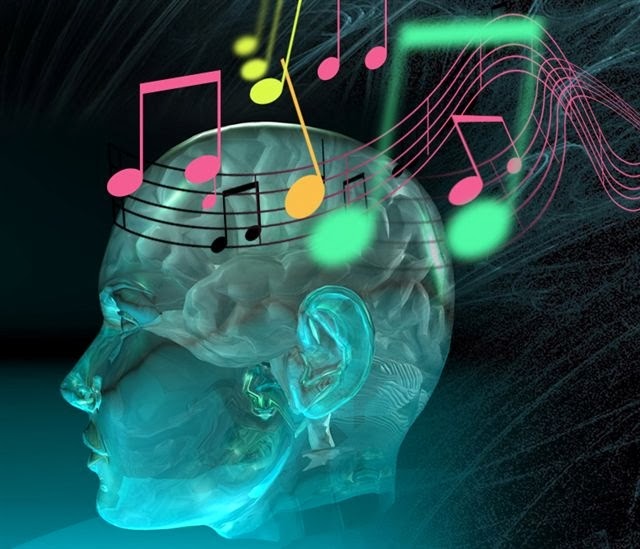
Go on a voyage of how our brains process music and how our culture shapes our musical preferences – helping us understand our motives, fears, desires, and memories. At every turn and at every stage of our lives, nature and nurture forge the uniquely human obsession with music.

Combining the cutting-edge experiments of top neuroscientists and the experiences of top musicians such as Sting, Michael Buble, Feist and Wyclef Jean, this explorative journey reveals why music is so important in our lives.

It examines our collective passion for music and illuminates how the brain uses music to create human experience.

Neuroscientist Daniel Levitin has been analysing music's effect on the brain. All that was missing was a master musician to study. Step forward Sting, lending his megabrain to science.

Levitin discovers that Sting's body is in motion when he thinks about So What by Miles Davis, and that we can control our mood through music and the way it makes us move. It's a fascinating study, but when Sting talks about birds being sexually attracted to the male with the greatest song, disturbing images are conjured up.


The fMRI of Sting must have been of great interest to Dr. Daniel Levitin, musician turned neuroscientist.

In a documentary "The Musical Brain" on JUNE 28, Levitin and others explore the brain on music, looking at how the brain shapes music and how music shapes the brain.

For this documentary, Sting underwent an fMRI and viewers of the show will see how music affects his brain.

Dr. Levitin designed four MRI tests for Sting. From "The king of 'brain'" (St. Catharines Standard):

Dr. Levitin, whose dream it was to scan the brain of a great musician, designed the MRI tests. The idea was to scan Sting's brain as it was actively doing something related to music.

In the first test, Levitin asked Sting to imagine a favourite melody. Even though there was no music playing, his toes moved to some inaudible beat.

Says [documentary writer and director Christina] Pochmursky: "We respond to imagined music the same way as we respond to music we hear."

The second test involved listening to different genres of music. Tango. Jazz. Classical. Even Muzak. Levitin mapped the response of Sting's brain.

Seems the only genre that prompted a different brain reaction was Muzak. It was, quite simply, too boring for his brain.

"The brain is like a kitten," says Pochmursky. "It's always curious. It always wants something it's never seen before. Then it perks right up."

In the final test, Levitin asked Sting to compose a melody he's never thought of before. Inside the MRI, Sting hums the beginnings of a song as his brain activity is recorded.


http://natgeotv.com/uk/my-music-brain/videos/an-interview-with-sting 

http://natgeotv.com/uk/my-music-brain/videos/my-music-brain


Watch The Musical Brain in Educational & How-To | View More Free Videos Online at Veoh.com


The power of music and its effect on the human mind is a fascinating topic for neuroscientists and musicians. Dr Daniel Levitin is both a neuroscientist and ex-rocker. In this documentary he shows how the brain uses music to shape human experience. Featuring insights from Grammy Award-winning musicians Sting, Wyclef Jean, Michael Buble and 4xGrammy-nominee Feist, this riveting documentary reveals how music is interpreted by those who create it and those who listen to it. Using the research findings of leading medical experts, including Dr. Daniel Levitin, the documentary examines the physical, psychological and emotional responses to music through a variety of tests on children and adults. Inspired by Dr. Daniel Levitin's book ('This is Your Brain on Music'), Sting puts his own musical mind to the test when he enters an fMRI (functional Magnetic Resonance Imaging) machine to have his brain scanned. Using state-of-the-art technology, the film demonstrates how Sting responds to various types of music - complex and simple - and what his musical brain reveals about him.

Friday, June 13, 2008

Unravelling Hatshepsut's Story


Unravelling Hatshepsut's Story


A mummy said to be Hatshepsut, the most powerful female pharaoh in Egypt, has been identified. 

Discovery News' Kasey-Dee Gardner spoke with Egyptologist Kara Cooney to help unravel the story. 

http://m.mefeedia.com/news/3235664


Move over, King Tut: There's a new pharaoh on the scene. A team of top archaeologists and forensics experts revisits the story of Hatshepsut, the woman who snatched the throne dressed as a man and declared herself ruler. Despite her long and prosperous reign, her record was all but eradicated from Egyptian history in a mystery that has long puzzled scholars. But with the latest research effort captured in this program, history is about to change. - See more at: http://feedfliks.com/movie/secrets-of-egypt-s-lost-queen/267176#sthash.oKqSRtYh.dpuf
Move over, King Tut: There's a new pharaoh on the scene. A team of top archaeologists and forensics experts revisits the story of Hatshepsut, the woman who snatched the throne dressed as a man and declared herself ruler. Despite her long and prosperous reign, her record was all but eradicated from Egyptian history in a mystery that has long puzzled scholars. But with the latest research effort captured in this program, history is about to change.